Marine Corps Asbestos Exposure Claims: VA Benefits and Civil Options

Updated November 11, 2026

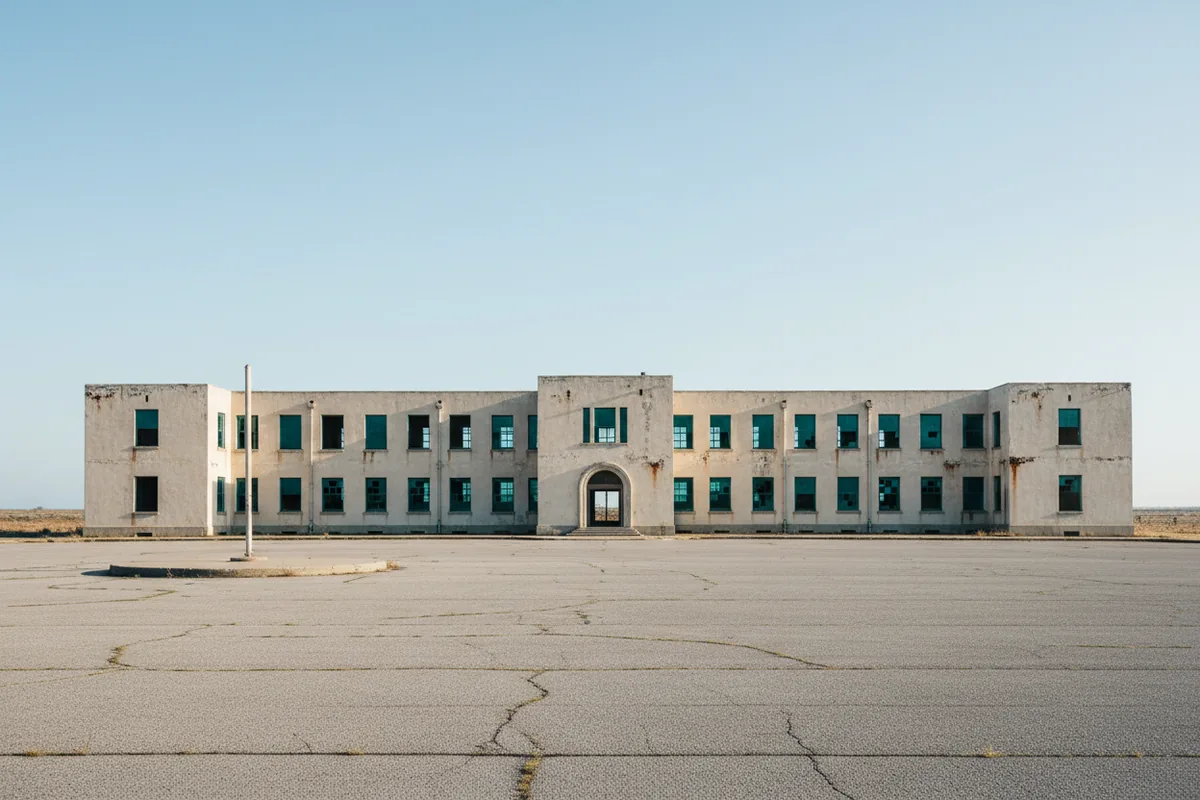
An empty Marine Corps barracks parade ground where veterans once served before asbestos exposure.
Immediate answer

Marine Corps asbestos exposure claims: the two conditions VA sets, the three documents it asks for, how Feres limits suits, and how civil claims differ.

On this page
  1. If You Are a Marine Corps Veteran With an Asbestos-Related Diagnosis
  2. Whether a Marine's Asbestos-Related Disease Can Qualify for VA Disability Benefits
  3. Gathering the Evidence VA Asks For Before Filing an Asbestos Claim
  4. Can a Marine Sue the Government Directly? Why It Is Rarely an Option
  5. If the Asbestos Came From a Company's Product: Civil and Trust Fund Claims
  6. If You Served Where Older Buildings Were Damaged, Including Iraq
  7. Questions Worth Asking Before Deciding Which Claim Path to Pursue
  8. Frequently asked questions
  9. Sources

If you served in the Marine Corps and now face an asbestos-related diagnosis, two separate kinds of claims may come into view: a VA disability compensation claim, and civil claims against companies that made asbestos products, including trust fund claims. A lawsuit against the government itself is generally limited by a 1950 Supreme Court decision.

Most people facing this question are carrying a lot at once. A Marine Corps veteran may have just heard the word mesothelioma from a doctor, decades after leaving the service, and is now wondering whether that service had anything to do with it. A spouse or grown child may be asking the same question after a death, trying to understand what the family can do while also grieving. This page explains how the VA route and the civil route each work, where they differ, and why the facts of one person's service and diagnosis decide which of them is open.

Two different systems handle asbestos claims for veterans, and they run on separate rules. The first is VA disability compensation, a federal benefit that the U.S. Department of Veterans Affairs decides. The second is civil litigation: lawsuits against companies that made or sold asbestos products, and claims filed with trusts that some of those companies set up. One does not automatically open the other, and a person is not assured that both are available at the same time.

The diseases at the center of these claims are serious. The VA's public health asbestos page says breathing asbestos mainly causes problems in the lungs and the membrane around them, including asbestosis, which it describes as "scarring of lung tissue that causes breathing problems," pleural plaques, and two types of cancer: lung cancer and mesothelioma, which VA calls "a cancer of the thin lining surrounding the lung (pleural membrane) or abdominal cavity (the peritoneum)." VA adds that mesothelioma "is a rare form of cancer usually caused by asbestos exposure."

The same VA page describes asbestos as a mineral fiber used in older buildings, which can matter for a veteran who worked in or around them. The site's guide to asbestos exposure and why it matters looks at how exposure happens.

What is at stake is practical: medical treatment, lost work, and whether anyone may be responsible. Because the two systems are separate, a person may weigh both at once. A first step many families take is writing down when and where the service happened, what jobs were held and what the diagnosis is, since those facts decide which path applies.

The VA's asbestos eligibility page sets two conditions, and it says both must be true: "You have a health condition that's caused by exposure to asbestos, and You had contact with asbestos while serving in the military." The link between the two, often called a nexus, means a medical connection between the in-service contact and the illness.

VA describes what this benefit provides in its own words: "Compensation provides tax-free monthly payments." It also notes that a veteran who gets a disability rating "may also be eligible for VA health care and other benefits." The VA public health page adds that VA decides these claims "on a case-by-case basis." A diagnosis by itself does not settle the question, and no category of veteran is assured of qualifying.

VA does not publish a list of Marine Corps jobs. Instead, it lists work and products that can involve asbestos. Its eligibility page names areas including mining, milling, shipyards, construction, carpentry and demolition of old buildings, and products including flooring, roofing, cement sheet, pipes, insulation, and "clutch facings and brake linings (called friction products)." The public health page adds insulation work and the manufacturing and installation of products such as flooring and roofing. Site guides on insulation worker asbestos exposure and Navy ship asbestos exposure look more closely at some of these settings.

For a veteran deciding whether to file, the question is less whether Marines generally encountered asbestos and more whether this person's records can show both conditions: whether any job held in service matches the work or products on VA's lists, and whether the treating doctor is willing to address the connection in writing.

Gathering the Evidence VA Asks For Before Filing an Asbestos Claim

VA's eligibility page names three documents it asks veterans to submit: "Medical records that state your health condition," "Service records that list your job or specialty," and "A doctor's statement that there's a connection between your contact with asbestos during military service and the health condition." VA says a claim can be filed online, by mail, in person, or with the help of a trained professional.

Each document answers a different part of the question. Medical records show the diagnosis. Service records show what the person did in uniform, which matters because VA's own lists tie exposure to kinds of work and products. The doctor's statement connects the two. A gap in any one of these can leave the claim without the proof VA asks for, which is why the records are often worth gathering early.

Service records usually come from the National Archives. Its military service records page says most veterans and their next of kin can get free copies of the DD Form 214, the Report of Separation, along with other records, and it describes the Official Military Personnel File. The page says "Recent military service and medical records are not online," that requests can be mailed or faxed to the National Personnel Records Center using the SF-180 instructions or its online system, eVetRecs, and that "All requests must be signed and dated by the veteran or next of kin." It also says requests cannot be accepted by email.

Timing and cost depend partly on age. The National Archives says records become archival and open to the public 62 years after separation, and that archival records carry a copying fee, while basic records for more recent separations are generally free to veterans, next of kin and authorized representatives. It also notes that "Most, but not all records, are stored at the NPRC" and that response times vary with the request, the availability of records and the workload.

The records that usually matter include the DD Form 214, the personnel file, medical records showing the diagnosis, and anything recording the jobs held during service.

Can a Marine Sue the Government Directly? Why It Is Rarely an Option

In Feres v. United States, 340 U.S. 135 (1950), the Supreme Court held that the government is not liable under the Federal Tort Claims Act for injuries to service members where the injuries "arise out of or are in the course of activity incident to service." That rule is known as the Feres doctrine. The Federal Tort Claims Act is the federal law that otherwise allows certain negligence suits against the United States.

For in-service asbestos exposure, the Feres doctrine generally closes off a direct negligence suit against the government. That can be hard to hear for someone who feels the exposure came from service itself.

The decision addresses suits against the government. A civil claim against a private company that made or sold an asbestos product, or a claim to a trust set up by such a company, is not a suit against the United States, and Feres does not bar it. That shifts the next question from who ran the base or ship to which products were used there and who made them. The site's page on Army asbestos exposure claims explains how the same split applies to soldiers.

If the Asbestos Came From a Company's Product: Civil and Trust Fund Claims

For a Marine, a civil case usually points not at the government but at the companies whose products contained asbestos, such as the pipes, insulation or brake linings named on VA's lists. Many of those companies went through bankruptcy and set up trusts to pay people harmed by their products, so a claim may run to a trust instead of a company in court. A trust claim is filed with the trust under its own rules. The site's guide to asbestos trust fund claims covers how they work.

Trust claims, lawsuits and VA benefits are separate mechanisms. A person may pursue one, more than one, or none, depending on the facts.

In practice, a veteran weighing a civil claim is asking three things: which product, or which company's product, was involved; whether there was exposure to it; and whether there is a diagnosed asbestos-related disease. This area of law is called product liability. Whether those elements are met depends entirely on the evidence, and nothing about a diagnosis proves that any particular company is responsible. What is at stake is whether the memory of a job, a ship or a vehicle can be tied to a named product.

Deadlines in civil cases come from state law. A statute of limitations is the time limit for filing a lawsuit, and these limits differ from state to state, including on when the period starts to run. Some states tie that start to when the disease was diagnosed or discovered. No single state's rule applies everywhere, and the facts of the case affect which rule governs.

When a family is weighing a civil claim, it can help to talk through with our attorney what is known about the products and the work history. A case evaluation request is available on this site.

If You Served Where Older Buildings Were Damaged, Including Iraq

The VA public health page says that "Veterans who served in Iraq and other countries in that region could have been exposed to asbestos when older buildings were damaged and the contaminant released into the air." It also explains that exposure "can be a serious health risk if asbestos-containing material is disturbed in such a way that the particles and fibers become airborne."

That statement is about damaged older buildings in that region. It does not say that any particular veteran was exposed. For a Marine who served in that part of the world, it means the question of exposure may reach more recent service, not only older eras.

The same page notes a long gap in time: symptoms such as shortness of breath, coughing and chest pain "often do not appear until 20 to 50 years after the exposure." That gap is one reason the exposure history behind a claim can be hard to piece together. VA's page also suggests that veterans concerned about health problems talk with a health care provider or a local VA Environmental Health Coordinator.

For a family looking back over a long career, this often means listing each deployment and duty station, noting any time spent in or near damaged older buildings, and raising any breathing symptoms with a health care provider.

Questions Worth Asking Before Deciding Which Claim Path to Pursue

Several questions usually shape which routes are open. What is the diagnosis, and does a doctor connect it to asbestos? When and where did the person serve, and in what jobs? What records exist, and can they be obtained? Can the exposure be tied to a specific product or company, or only to service in general?

The answers point in different directions. VA benefits rest on service and a medical connection. Civil claims rest on a product and its maker. Trust claims follow each trust's own rules, so one person's facts may open one path and not another.

When the veteran has died, the picture changes. Surviving family members may have options that differ from the veteran's own, and civil wrongful death claims, meaning claims brought by family after a death, follow state law that varies from state to state. The dates of service, diagnosis and death can affect which deadline applies.

These questions rarely have quick answers. A conversation with our attorney can go through the service history, the diagnosis and the records a family already has, and help sort out how the different paths relate to one another.

Free case evaluation

No Fee Unless We Win Your Case

A free case evaluation is how it starts. Tell us what happened, and we’ll help you understand your options. You pay no fee unless we win your case.

Mesothelioma Legal Advocates

How it works

  1. Call us or request a free case evaluationTell us what happened, in your own words.
  2. Talk through your caseYour options, and what your case may be worth.
  3. No fee unless we winYou pay no attorney fee unless we win your case.
Free case evaluation

Tell Us What Happened

Frequently asked questions

What diseases does the VA recognize as connected to asbestos exposure?

The VA public health page says breathing asbestos mainly causes problems in the lungs and the surrounding membrane, including asbestosis, pleural plaques, lung cancer and mesothelioma. It describes mesothelioma as a rare cancer of the lining around the lung or abdominal cavity, usually caused by asbestos exposure.

What does a Marine Corps veteran need to show to get VA disability benefits for asbestos exposure?

VA's eligibility page says two things must both be true: a health condition caused by asbestos exposure, and contact with asbestos during military service. It asks for medical records, service records listing the job or specialty, and a doctor's statement connecting the two. VA decides each claim case by case.

Where can a veteran get military service records to support an asbestos claim?

The National Archives says most veterans and next of kin can get free copies of the DD Form 214 and other service records. Requests go to the National Personnel Records Center by mail, fax or eVetRecs, must be signed and dated, and cannot be made by email.

Can a Marine Corps veteran sue the government for asbestos exposure during service?

Generally not. Feres v. United States held that the government is not liable under the Federal Tort Claims Act for service members' injuries arising out of or in the course of activity incident to service. Claims against private manufacturers or their trusts are a separate path that Feres does not bar.

What is an asbestos trust fund and how does it differ from a VA claim?

An asbestos trust is set up by a company that went through bankruptcy, to pay people harmed by its products. A trust claim focuses on exposure to that company's product. A VA claim focuses on in-service contact and a medical connection. The two run under different rules and are not always both available.

Does a mesothelioma diagnosis from asbestos exposure during Marine Corps service qualify for VA benefits?

A diagnosis alone does not settle it. VA's eligibility page also requires contact with asbestos during service, and it asks for service records and a doctor's statement connecting that contact to the condition. VA decides these claims case by case, so no outcome is assured.

Are surviving family members of a Marine Corps veteran who died from mesothelioma eligible to file claims?

Families may have options after a death, but they differ from those open to a living veteran. Civil wrongful death claims follow state law, which varies from state to state, and which options exist depends on the facts of the service, the diagnosis and the death.

How long does a veteran have to file an asbestos-related civil claim?

That depends on state law. Statutes of limitations for civil asbestos claims differ by state, including on when the period begins, which some states tie to diagnosis or discovery of the disease. No one state's rule applies everywhere.