Secondary Asbestos Exposure: What It Is and Why It Matters Legally

Updated November 10, 2026

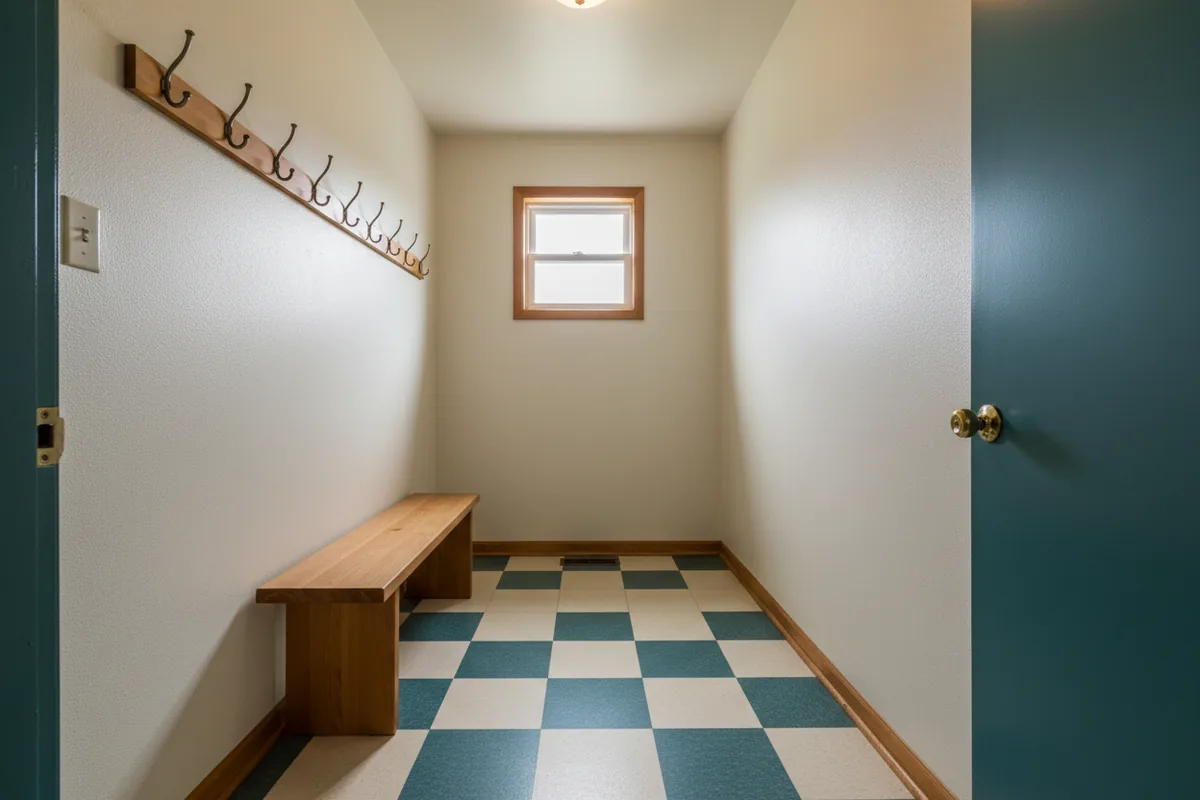
An empty home mud room where contaminated work clothing was removed, spreading asbestos fibres.
Immediate answer

Secondary asbestos exposure: how fibers reach family members on work clothes, what OSHA's clothing and change-room rules say, and how household claims differ.

On this page
  1. What Secondary Asbestos Exposure Is
  2. How Fibers Travel From a Worksite Into a Home
  3. Who Is Most Often Affected by Household Exposure
  4. The Latency Period: Why Illness Appears Decades Later
  5. How a Secondary Exposure Claim Is Documented
  6. Why the Legal Theory Differs From a Worker's Claim
  7. Questions Worth Asking Before Pursuing a Secondary Exposure Claim
  8. Frequently asked questions
  9. Sources

Secondary asbestos exposure happens when someone who never worked with asbestos breathes fibers that a worker carried home on clothing, skin, hair or shoes. The National Cancer Institute lists living with a person who works near asbestos as a mesothelioma risk factor. A family member's legal claim usually follows a different path than a worker's own claim.

Most people facing this question are not the person who worked in the shipyard, the plant or the construction site. They are the wife who shook out his work clothes before every wash, the son who hugged his father at the door, or the family now sitting with a mesothelioma diagnosis and asking how it could happen to someone who never set foot near the job. If that is where you are, the questions are usually practical ones: how the fibers got into the house, whether that can be shown decades later, and whether the law treats a family member's illness any differently than a worker's.

This page explains how take-home exposure works, which records tend to matter, and why the legal theory for a household member is not the same as the one for the worker.

What Secondary Asbestos Exposure Is

Secondary exposure, also called household exposure, describes asbestos contact that reaches a person through someone else's work rather than their own. The plainest form is take-home exposure: fibers picked up at a worksite, carried away on a worker's body or clothes, and released inside the family home, where people who never handled asbestos breathe them.

That is different from direct occupational exposure, where the worker breathes fibers on the job while cutting, mixing, installing or tearing out asbestos-containing material. The separate page on occupational asbestos exposure covers the trades and records involved in a worker's own exposure.

The National Cancer Institute treats household exposure as a recognized concern. Its mesothelioma causes and risk factors page states that "living with a person who works near asbestos is also a risk factor for mesothelioma." The same page adds that not every person with a risk factor will develop mesothelioma, and that it can develop in people with no known risk factor.

NCI's asbestos fact sheet says "there is some evidence that family members of workers heavily exposed to asbestos face an increased risk of developing mesothelioma," and that this risk "is thought to result from exposure to asbestos fibers brought into the home on the shoes, clothing, skin, and hair of workers." That is the agency's language: some evidence, not proof in any individual case. The National Library of Medicine's MedlinePlus article on asbestosis makes a similar point: "Household members of asbestos workers can also be exposed from asbestos particles brought home on the worker's clothing."

If you are a family member who never worked near asbestos, this recognition means your illness is not dismissed simply because the job was someone else's. It also means the focus shifts to the worker's job, because a household member stands in a different legal position than the worker did, as the sections below explain.

How Fibers Travel From a Worksite Into a Home

The NCI fact sheet names the carriers directly: shoes, clothing, skin and hair. Fibers that settle on a worker during a shift can travel home in the car, come off in the entryway, and come loose again when the clothes are handled. For many families, the moment that comes up again and again is laundry: shaking out a pair of coveralls, sorting a work shirt into a basket, or washing it alongside the family's other clothes.

Federal workplace rules reflect that same pathway. The general industry asbestos standard at 29 C.F.R. § 1910.1001 sets out what employers must do with contaminated work clothing and where workers change.

Under paragraph (h), the employer must ensure that employees remove asbestos-contaminated work clothing "only in change rooms," and that "no employee takes contaminated work clothing out of the change room, except those employees authorized to do so for the purpose of laundering, maintenance, or disposal." Contaminated clothing must be stored in closed containers, labeled, and transported "in sealed impermeable bags, or other closed, impermeable containers." The employer must also prohibit removing asbestos from clothing "by blowing or shaking," and must inform anyone who launders contaminated clothing "of the potentially harmful effects of exposure to asbestos."

Paragraph (i) covers hygiene facilities. For employees whose airborne exposure is above the time-weighted average or excursion limit, the employer must provide clean change rooms "equipped with two separate lockers or storage facilities, so separated as to prevent contamination of the employee's street clothes from his protective work clothing and equipment." Those employees must shower at the end of the shift and may not "leave the workplace wearing any clothing or equipment worn during the work shift."

These rules show that the federal government treats fiber transfer through work clothes as a hazard worth regulating. They are not a finding about any particular workplace, employer or family. Whether rules like these applied at a given job, in a given era, and what actually happened there, are factual questions.

For a family member, the details that tend to carry weight are concrete ones: who handled the work clothes, how often, where they were washed, and over how many years. A conversation with an attorney can help a family member put those memories into an order that makes sense.

Who Is Most Often Affected by Household Exposure

Spouses and partners who laundered a worker's clothes are the group most often described in household exposure cases, because laundry is the pathway the federal clothing rules address. Children who greeted a parent coming off a shift, rode in the same car, or played near the work clothes can be part of the picture too, as can other relatives who shared the home in close daily contact.

The worker's job shapes everything that follows. NCI's fact sheet describes industries that used asbestos heavily: building and construction (cement, plastics, insulation, roofing, fireproofing and sound absorption), shipbuilding (insulating boilers, steam pipes and hot water pipes), and the automotive industry (brake shoes and clutch pads). It also names insulation work, asbestos mining and milling, asbestos textile and product manufacturing, demolition, drywall removal, firefighting and automobile work among the trades where asbestos hazards have been recognized.

Being a spouse or child of someone in one of these trades does not by itself mean a person has a claim. What tends to matter is the specific chain: the worker's employer, the job site, the occupation, the years of employment, and the products used there. The page on mesothelioma exposure history explains how families often rebuild that chain.

Military service adds a separate set of questions. Where a family member's exposure is linked to a veteran's service, the service branch and the historical exposure setting come into it, and VA benefit considerations are a separate matter from civil claims. Not every veteran or veteran's family member qualifies for either, and the two are not automatically available together. The page on veterans mesothelioma claims covers that ground.

The Latency Period: Why Illness Appears Decades Later

Asbestos-related diseases have a long latency period, meaning the gap between exposure and the first signs of illness. NCI's causes page says that after exposure, "it usually takes a long time for mesothelioma to form." The NCI fact sheet is more specific: "It can take from 10 to 40 years or more for symptoms of an asbestos-related condition to appear." MedlinePlus describes malignant mesothelioma as able to "develop 20 to 40 years after exposure."

For a family, that gap has real consequences. By the time a spouse or child is diagnosed, the worker may have retired, changed employers several times, or died. The company that ran the job site may have closed, merged or changed names. Records can be scattered, and the people who remember the work may be few.

The latency period also bears on the legal clock. A statute of limitations is the law that sets how long a person has to bring a civil claim. In asbestos cases, a central question is when that period starts to run, because the exposure may have happened decades before anyone knew of an illness. States answer that question through their own statutes and court decisions, and limitation periods, their starting points and their exceptions differ from state to state. No single rule applies everywhere, and wrongful-death claims can have their own timing rules.

A conversation with an attorney can help a family member understand how a diagnosis date fits into the law of the state that governs the claim.

How a Secondary Exposure Claim Is Documented

A secondary exposure claim has to trace fibers through two lives: the worker's job and the household member's home.

The worker's side covers employment records, job-site records, and an occupational history showing where the worker was, what they did, and when. Product identification often sits at the center: identifying the specific asbestos-containing products the worker used or worked near, because claims are generally brought against the makers of those products or the owners of the sites, not against asbestos in general. For a family, that means a diagnosis alone does not tell the story; the worker's job details are what point to who may be responsible.

The household member's side covers medical records establishing the diagnosis, and records placing that person in the home during the exposure years, such as marriage records, household records, school records and photographs.

If you are a family member in this position, the records that often turn up include pay stubs, union records, Social Security earnings history, old photographs of the worker in work clothes, and the names of coworkers who remember the job and the products used there. Families also often write down what they remember about the laundry routine and the years it went on. NCI's fact sheet notes that a lung biopsy is the most reliable test to confirm asbestos exposure, while cautioning that such tests cannot determine how much asbestos a person was exposed to or whether disease will develop. Medical evidence of exposure is a separate question from where the fibers came from.

This evidence can feed more than one route. Trust funds set up in the bankruptcies of some asbestos companies and civil lawsuits are distinct mechanisms, with their own rules. One is not a substitute for the other, and a family should not assume both are open in a given situation. The page on mesothelioma claims pathways explains how they differ. A conversation with an attorney can help sort which records a family already has and which gaps matter most.

A household member was not the employer's employee, and that changes the legal framework. A worker's claim against their own employer is generally limited by workers' compensation rules. Those limits generally do not apply to a spouse or child who was never employed there, so a family member's claim is usually a civil claim in tort, meaning a claim that someone's wrongful conduct caused harm. For a family, this means the claim is not routed through the worker's employment benefits, and the possible defendants look different.

Two theories come up most often, and which one fits depends on what the family can show about the worker's job. If the focus is on the asbestos-containing products the worker handled, the theory is usually product liability: a claim against the companies that made or sold those products, based on the product and the warnings that came with it. If the focus is on the site where the worker was exposed, the theory is usually premises liability: a claim against the owner or operator of that property, based on how it was run.

Under either theory, the law asks four questions, and each one ties back to something a family may be able to show:

  • Duty. Was a duty owed to the household member (or, in a death case, to the person who died)? This is where a family member's distance from the site matters, since states differ on how far a duty reaches to people who were never there.
  • Breach. Was that duty breached? This tends to turn on how the products were labeled or how the site handled asbestos.
  • Causation. Did the specific products or premises cause the fibers that reached the household member? This is why the worker's job history and the laundry routine carry so much weight.
  • Damages. Were there damages? Medical records and the effect of the illness on the household bear on this question.

Whether each element is met depends on the facts. Fault and damages rules differ by state as well. In states that use comparative fault, recovery can be reduced or shaped by each party's share of responsibility; some states use other fault rules. If the person who became ill has died, close family or an estate representative may bring a wrongful-death claim, meaning a claim after a death caused by another's wrongful conduct, under rules each state sets. The damages the law may allow can include categories such as medical expenses, lost earnings, pain and suffering, and wrongful-death damages, depending on the state and the facts. None of this is assured in any case, and a conversation with an attorney can help a family see which theory and which state's rules may apply.

Questions Worth Asking Before Pursuing a Secondary Exposure Claim

Where did the worker work, and when? That threshold question shapes almost everything else, because the occupational history is what ties household fibers to a source. Families often start by listing employers, job sites and trades by decade.

Which records from that era still exist? Union halls, former employers, Social Security earnings history, old photographs and coworkers can each fill part of the gap. Some sources may be gone; others turn up in unexpected places.

Which state's limitation period applies, and when does it start? Because limitation periods differ by state, the answer depends on where the claim would be brought and how that state treats the timing of a diagnosis.

Is the worker living and able to talk about the job? A worker's own memory of products, sites and coworkers can be some of the most specific information a family has. When the worker has died, families often rely more on records and on others who knew the work.

These questions do not have to be answered all at once. If you would like to talk through which records may matter most and how the latency period and the limitation period fit together in your state, you can request a case evaluation with our attorney. It is a conversation about what happened, with no promise about any outcome.

Free case evaluation

No Fee Unless We Win Your Case

A free case evaluation is how it starts. Tell us what happened, and we’ll help you understand your options. You pay no fee unless we win your case.

Mesothelioma Legal Advocates

How it works

  1. Call us or request a free case evaluationTell us what happened, in your own words.
  2. Talk through your caseYour options, and what your case may be worth.
  3. No fee unless we winYou pay no attorney fee unless we win your case.
Free case evaluation

Tell Us What Happened

Frequently asked questions

What happens if you come into contact with asbestos once?

NCI's fact sheet says health risks increase with heavier and longer exposure, but investigators have found asbestos-related diseases in people with only brief exposures. NCI also says the overall evidence suggests there is no safe level of asbestos exposure. NCI notes that most people exposed to low levels do not become ill. Questions about a personal health risk belong with a doctor.

How long can asbestos fibers remain on clothing?

The supplied sources give no time period. What they do show is that fibers on work clothes are treated as a hazard: 29 C.F.R. § 1910.1001(h) requires contaminated clothing to stay in change rooms, sealed in containers for transport, and never cleaned by blowing or shaking.

How many years does it usually take before asbestos-related diseases appear?

NCI's fact sheet says it can take from 10 to 40 years or more for symptoms of an asbestos-related condition to appear. MedlinePlus says malignant mesothelioma can develop 20 to 40 years after exposure. That long gap is why legal timing in asbestos cases often turns on when a disease was diagnosed or discovered.

Can a family member who never worked with asbestos develop mesothelioma?

Yes, it can happen. NCI lists living with a person who works near asbestos as a mesothelioma risk factor, and its fact sheet states there is "some evidence" that family members of heavily exposed workers face an increased risk, thought to result from fibers brought home on workers' shoes, clothing, skin and hair.

Is a secondary exposure claim the same as a worker's asbestos claim?

No. A worker's claim against an employer is generally limited by workers' compensation rules. A family member was not that employer's employee, so the claim is generally a civil one, often product liability against makers of asbestos products or premises liability against site owners. The legal elements and defendants differ.

What records help document a secondary asbestos exposure claim?

The worker's employment records, job-site records and occupational history are central to tracing the fiber source, along with identifying the products used. The household member's medical records and records placing them in the home during the exposure years also bear on the claim. Families often find union records and Social Security earnings history useful too.

Does a statute of limitations apply to a secondary asbestos exposure claim?

Yes. Civil claims brought by family members are subject to limitation periods. How long the period is, when it starts to run and what exceptions apply differ from state to state, and a wrongful-death claim may follow its own timing rule. No single rule applies everywhere.

Is asbestosis a terminal illness?

MedlinePlus describes asbestosis as a lung disease caused by breathing asbestos fibers, which scar the lung. It states there is no cure and that outcome depends on how much asbestos a person was exposed to and for how long. Asbestosis is a different disease from mesothelioma, though the conditions can coexist.