
Asbestos Trust Fund Claims: What They Are and How They Work

Updated November 10, 2026

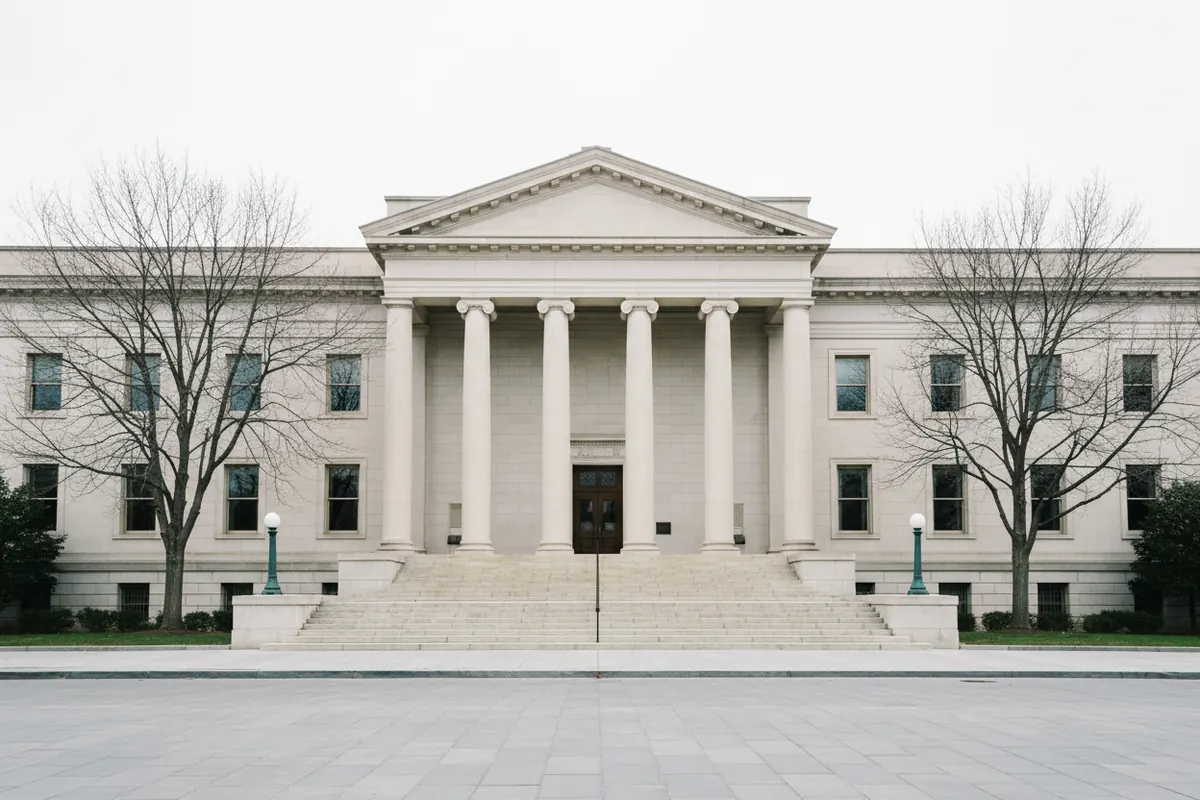
Stone steps and columns of a federal courthouse where asbestos trust fund claims are processed.
Immediate answer

An asbestos trust fund claim goes to a trust set up under 11 U.S.C. § 524(g) when a company reorganizes. How it differs from a lawsuit and what records matter.

On this page
  1. When a Company Behind the Exposure Went Bankrupt: What an Asbestos Trust Fund Claim Is
  2. Diagnosed Years After Exposure: Why Congress Created This Mechanism
  3. How a Trust Claim Differs from a Lawsuit
  4. Gathering Proof for a Trust Claim: What a Person Has to Show
  5. What Happens After a Claim Is Filed
  6. Before Filing: Questions a Family May Weigh About a Trust Claim
  7. Frequently asked questions
  8. Sources

If you or someone you love has mesothelioma and keeps hearing about "trust funds," here is the short answer. An asbestos trust fund claim is a request for payment sent to a trust that a bankruptcy court set up when a company facing asbestos lawsuits reorganized. The trust took over that company's asbestos liabilities. A trust claim is not a lawsuit: the trust decides it, not a judge or jury.

Most people facing a mesothelioma diagnosis come to this question tired, frightened and short on time. They may be sitting with a pathology report, trying to remember which job sites a parent worked at forty years ago, or wondering whether a company whose name they recognize from an old work uniform still exists. Families after a death often carry the same questions while also handling grief and an estate. This page explains what a trust claim is, why the law created it, how it differs from a court case, and what records tend to matter.

When a Company Behind the Exposure Went Bankrupt: What an Asbestos Trust Fund Claim Is

The legal basis for these trusts is one federal statute: 11 U.S.C. § 524(g), part of the federal Bankruptcy Code. It lets a court that confirms a chapter 11 plan issue a special order tied to an asbestos trust. A chapter 11 plan is the court-approved blueprint a company follows when it reorganizes in bankruptcy instead of shutting down. The special order is an injunction, which is a court order telling people to do, or stop doing, something.

Under the statute, the injunction can bar legal action to collect on any claim that the plan says is to be paid in whole or in part by the trust, except actions the injunction, the confirmation order or the plan expressly allows. The trust it works with must meet several conditions set out in the text, including that it:

  • is to assume the liabilities of a debtor that had been named as a defendant in personal injury, wrongful death or property-damage actions over asbestos or asbestos-containing products;
  • is to be funded in whole or in part by the debtor's securities and by the debtor's obligation to make future payments, including dividends;
  • is to own, or be entitled to own if specified contingencies occur, a majority of the voting shares of the debtor, its parent or a subsidiary that is also a debtor; and
  • is to use its assets or income to pay claims and demands.

The court must also make findings, among them that the debtor is likely to face substantial future demands for payment, and that the actual amounts, numbers and timing of those demands cannot be determined.

So an asbestos trust fund claim is a claim made to one of these trusts rather than to the company itself. If you recognize a company name from a work history, the practical question is what happened to that company. A company that went through this kind of reorganization is generally reached through its trust. A company still in business that never did is reached, if at all, through a civil lawsuit. These are two separate mechanisms, and having one available does not mean the other is.

Diagnosed Years After Exposure: Why Congress Created This Mechanism

If you were diagnosed decades after the work that exposed you, this law was written with people in your position in mind. Before a trust can be protected by the injunction, the court must find that "the actual amounts, numbers, and timing of such future demands cannot be determined," and that pursuing those demands outside the plan "is likely to threaten the plan's purpose to deal equitably with claims and future demands."

Asbestos disease is the reason that problem exists. People often learn of an illness long after the exposure, so at the time a company reorganizes, many of the people who will someday be diagnosed do not yet know it. The statute calls their later requests "demands": demands for payment, present or future, that were not claims during the bankruptcy, that arise from the same or similar conduct or events, and that the plan says the trust will pay.

The law builds protections for those future claimants into the process. For the injunction to apply to future demands, the court must appoint a legal representative to protect the rights of people who might later assert them. Before confirming the plan, it must also find that the arrangement is fair and equitable to those people in light of what is being put into the trust. A separate class of the claimants the trust will address must vote for the plan by at least 75 percent of those voting. And the trust must operate through mechanisms that give reasonable assurance it will value and pay present claims and future demands that involve similar claims in substantially the same manner.

The injunction channels claims away from the reorganized company and toward the trust. The scope is not limited to a living person's injury claim: the statute names wrongful death and property-damage actions too. For a family after a death, that is part of why a trust may still be a route to consider. For anyone, it explains why a trust claim is not the same as suing the company: the court order generally stands between the claimant and the company.

How a Trust Claim Differs from a Lawsuit

A trust claim is resolved outside of court. The trust reviews it under its own procedures, which are set up as part of the bankruptcy plan. There is no jury, no trial and no judge deciding the claim itself. The statute does give one court a specific role: proceedings about the validity, application, construction or modification of the injunction may be brought only in the district court that entered it.

A civil lawsuit works differently. It is filed in a state or federal court against defendants that have not gone through this kind of bankruptcy. The person bringing it generally has to show what the law of the place requires, and there can be discovery, motions, settlement talks and a trial. Our mesothelioma lawsuit explainer covers that path in more detail.

The rules around a lawsuit are largely state law. Limitation periods, which are the deadlines for filing a case, fault rules and damages rules differ from state to state, and no one state's rule applies everywhere. A trust claim answers to the trust's own procedures instead.

This difference becomes practical when a person's work history is long. Someone who spent decades in shipyards, plants or construction may have been around products from many companies. Some of those companies may have reorganized and created trusts. Others may still be operating. More than one mechanism can then be relevant, but each runs on its own track, with its own rules and its own decision-maker. Whether any of them is available depends on the facts of the exposure and the law that applies. A wider view of these routes, including VA benefits for veterans, appears in our page on mesothelioma claims pathways.

Gathering Proof for a Trust Claim: What a Person Has to Show

Each trust sets its own criteria. The statute does not lay out a single evidentiary standard that every trust follows, so the details of what counts and how much is needed vary from one trust to the next. In general terms, though, trust claims tend to turn on three things.

The first is a diagnosis. Medical documentation of an asbestos-related disease, such as mesothelioma, asbestosis, asbestos-related lung cancer or another condition a trust covers, is typically part of a claim.

The second is exposure to that particular company's asbestos-containing products. It is not enough in most settings to show exposure to asbestos in general. The question is whose product was there. This is often the hardest part for families, because the exposure may have happened decades ago at job sites that no longer exist.

The third is the connection between the two: that the diagnosed disease is linked to the exposure the claim describes.

If you are gathering records, the ones that usually matter include medical records and pathology reports, employment records, a Social Security work history, documents that identify products used on the job, and statements from coworkers or others who remember the products and the work. People in this situation often find that a former coworker's memory of a brand name or a box label fills a gap nothing else can. Those same product names are also how the relevant trusts are identified, since each trust stands in for a particular company. For veterans, service records can be part of the exposure story, though military service alone does not establish anything about a particular product. Our page on occupational asbestos exposure explains which jobs and records come up most often.

What Happens After a Claim Is Filed

Once a claim is submitted, the trust reviews the documentation against its criteria and issues a determination. That determination is an administrative decision by the trust. It is not a court judgment, and it is not a finding by a judge or jury about anyone's fault.

For a claimant, the way a trust values and pays claims shapes what a determination can look like. The statute lists the kinds of tools a trust may use: structured, periodic or supplemental payments, pro rata distributions, matrices, periodic review of estimates of present claims and future demands, or other comparable mechanisms. In plain terms, a matrix sorts a claim into a group based on factors such as disease and exposure. A pro rata distribution means a claim may be paid a share, based on what the trust can afford, rather than in full. Some trusts may offer different review tracks or payment options, and how those work is set by each trust's own procedures.

The goal the statute states is that the trust will value, and be in a financial position to pay, present claims and future demands that involve similar claims in substantially the same manner. That is a goal for the trust's design, not a promise about any one claim.

No single timeline applies to every trust. How long a review takes can depend on how complete the submitted documentation is and on the trust's own procedures. For a family watching a loved one's health, that uncertainty is hard, and it is one reason the completeness of records tends to matter as much as it does.

Before Filing: Questions a Family May Weigh About a Trust Claim

The first question is usually about identity: which companies' products was the person exposed to, and have any of those companies established trusts under § 524(g)? Answering it means piecing together job sites, years, trades and product names. Our page on how an asbestos lawyer approaches a case describes how defendants are grouped by type.

The second is whether a civil lawsuit against companies that are still solvent may also be relevant. Trust claims and lawsuits are not mutually exclusive in every situation, but they are separate proceedings, and one being available does not make the other available.

The third concerns how the two interact. In some places, money from a trust claim may affect a civil case, for example through an offset or credit against what a defendant in court may owe. How that works is a legal question that varies by jurisdiction.

The fourth is timing. Limitation periods for civil claims differ by state, and when they start to run and what exceptions apply depend on that state's law. Trusts also set their own deadlines under their own procedures. The two sets of deadlines are separate.

These questions often arrive at once, while treatment, work and family obligations compete for attention. A conversation with our attorney can cover the exposure history, the companies and products involved, the diagnosis and its records, and how trust claims and any court case might fit together. If that would help, you can request a case evaluation when you are ready.

Free case evaluation

No Fee Unless We Win Your Case

A free case evaluation is how it starts. Tell us what happened, and we’ll help you understand your options. You pay no fee unless we win your case.

Mesothelioma Legal Advocates

How it works

  1. Call us or request a free case evaluationTell us what happened, in your own words.
  2. Talk through your caseYour options, and what your case may be worth.
  3. No fee unless we winYou pay no attorney fee unless we win your case.
Free case evaluation

Tell Us What Happened

Frequently asked questions

What is an asbestos trust fund?

An asbestos trust fund is a trust created under 11 U.S.C. § 524(g) when a company facing asbestos lawsuits reorganizes under chapter 11. The trust assumes the company's asbestos-related liabilities and uses its assets or income to pay claims and demands. The court must find, among other things, that the company is likely to face substantial future demands whose amounts and timing cannot be determined.

How do you prove you were exposed to asbestos?

Exposure is usually shown through a mix of employment records, work history, product identification documents and statements from coworkers or others who connect the person to a specific company's products. Medical records showing the diagnosis are part of the picture too. What a given trust accepts depends on its criteria.

How long does an asbestos claim take?

No single timeline applies. A trust claim's timing varies by trust and can depend on how complete the documentation is and on the trust's own procedures. A civil lawsuit runs on a separate timeline shaped by the court's schedule and the procedural rules of the place where it is filed.

Can a family file an asbestos trust fund claim after a person has died?

The statute's scope includes asbestos-related wrongful death actions, not only claims by living people. A wrongful death claim is a claim brought by family or an estate after a death caused by another's conduct. Whether a family member may file a trust claim, and on what conditions, depends on the trust's procedures and on state law, which varies.

Can a person file both a trust fund claim and a lawsuit?

Sometimes more than one mechanism is relevant, but they are distinct. A person's exposure history may involve companies that reorganized and created trusts and companies still in business that could be sued in court. Whether either route, or both, is available depends on the specific exposure history and the applicable law.

What diseases qualify for an asbestos trust fund claim?

The statute covers asbestos-related personal injury and wrongful death claims. Mesothelioma, asbestosis and asbestos-related lung cancer are among the conditions trust claims commonly involve, and each trust defines the conditions it covers.