Navy Ship Asbestos Exposure: What It Means for Veterans and Their Families

Updated November 10, 2026

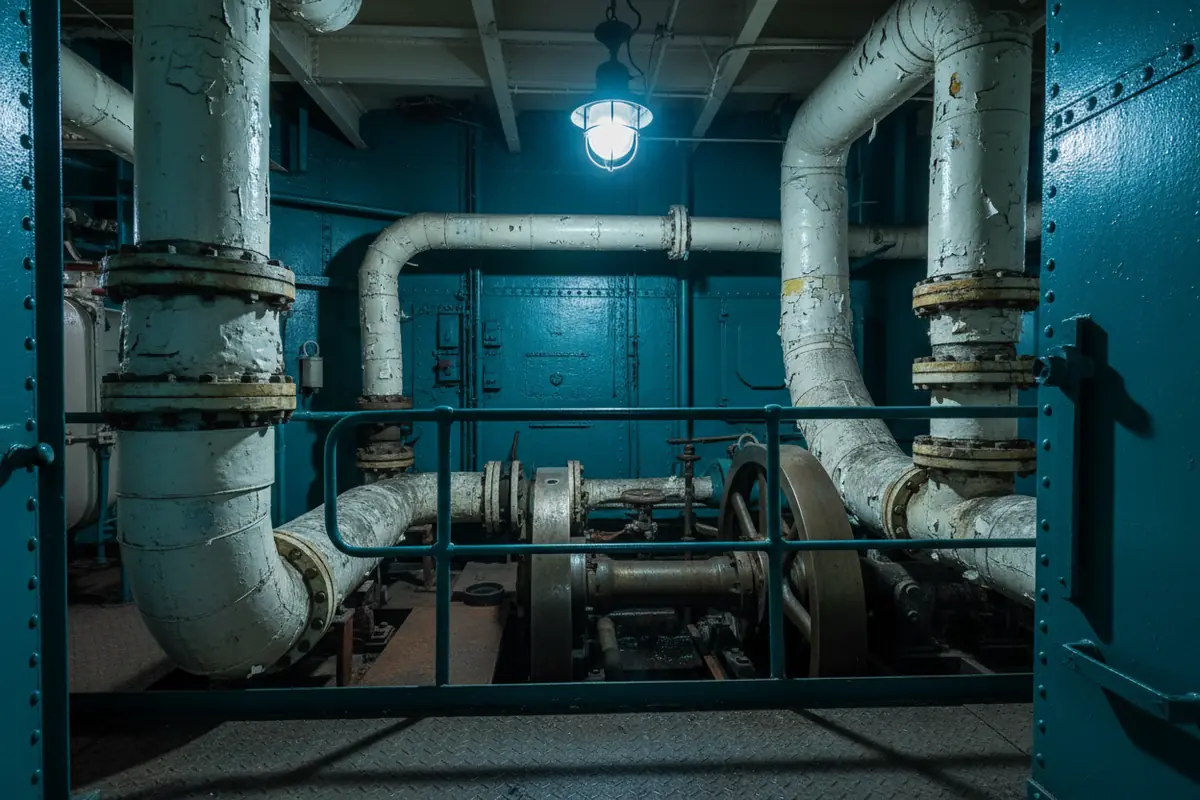
The insulated pipe-lined engine room of a decommissioned naval vessel, completely still.
Immediate answer

Navy ship asbestos exposure explained: what NCI says about shipboard insulation, the three documents VA asks for, how Feres limits suits, and civil claim basics.

On this page
  1. Where a Navy Veteran May Have Encountered Asbestos Aboard Ship
  2. How a Diagnosis Today May Connect to Service Decades Ago
  3. What the VA Looks For When a Veteran Seeks Compensation
  4. Which Service Records Help Show Where a Veteran Served
  5. Why the Navy Itself Generally Cannot Be Sued, and What Remains Open
  6. What a Family Would Need to Show in a Civil Asbestos Claim
  7. Questions Families Often Weigh Before Pursuing a Claim
  8. Frequently asked questions
  9. Sources

Asbestos was used aboard ships to insulate boilers, steam pipes and hot water pipes, and the National Cancer Institute links asbestos to mesothelioma and lung cancer. A Navy veteran with an asbestos-related disease may be able to seek VA disability compensation. A suit against the Government itself is generally barred, but civil claims against others are a separate question.

Most people facing this question are carrying a recent diagnosis that seems to come out of nowhere: a scan, a biopsy, a doctor asking about jobs held forty or fifty years ago. If you served aboard a Navy ship, or you are the spouse or child of someone who did, you may be trying to work out how a career that ended decades ago connects to an illness today, what the VA will look at, and whether anyone besides the VA has any part in the picture. This page walks through those questions in order: how asbestos was used, which diseases are linked to it, what the VA asks for, which records matter, and how the law treats a civil claim.

Where a Navy Veteran May Have Encountered Asbestos Aboard Ship

If you served aboard a Navy ship, the equipment you worked near is often the first clue. Asbestos is a naturally occurring mineral fiber, valued because it resists heat and insulates well. The National Cancer Institute's asbestos fact sheet states that asbestos has been mined and used commercially in North America since the late 1800s, and that "its use increased greatly during World War II." The same fact sheet states plainly that "the shipbuilding industry has used asbestos to insulate boilers, steam pipes, and hot water pipes."

For a veteran or a family, that sentence is the starting point. A ship depends on heat and steam, and the materials wrapped around that equipment were where asbestos was commonly found. The fact sheet also lists other uses, including fireproofing, sound absorption, floor and ceiling tiles, paints, coatings, adhesives and plastics.

Asbestos causes harm when it gets into the air. The VA's public health page on asbestos explains that exposure "can be a serious health risk if asbestos-containing material is disturbed in such a way that the particles and fibers become airborne." Repair work, maintenance, or simply working near insulation that was cut, scraped or worn could, depending on the facts, be the kind of disturbance that matters. The VA's page also notes that the federal government began regulating asbestos use in the mid-1970s, which is one reason many families trace exposure to service before then. Recalling which compartments, tasks and years were involved is often where a conversation with an attorney begins.

For background on how exposure happens in general, see the site's overview of asbestos exposure. Work building and repairing ships in a yard raises its own questions, covered separately under shipyard asbestos exposure.

How a Diagnosis Today May Connect to Service Decades Ago

A diagnosis is usually the reason a family starts asking about service records in the first place. The National Cancer Institute states that asbestos has been classified as a known human carcinogen, meaning a substance that causes cancer, by the U.S. Department of Health and Human Services, the Environmental Protection Agency and the International Agency for Research on Cancer.

According to that fact sheet, there is sufficient evidence that asbestos causes mesothelioma, which NCI describes as "a relatively rare cancer of the thin membranes that line the chest and abdomen," as well as cancers of the lung, larynx and ovary. NCI adds that "it is thought that most mesotheliomas are due to asbestos exposure." The VA's public health page describes mesothelioma as a cancer of the lining surrounding the lung or the abdominal cavity, and names lung cancer and mesothelioma as the two types of cancer caused by asbestos exposure.

The VA's page also describes two non-cancer conditions. Asbestosis is "scarring of lung tissue that causes breathing problems." Pleural plaques are scarring on the inner surface of the ribcage and the area around the lungs, which the VA says can cause breathing problems, though usually not as serious as asbestosis.

Timing is what puzzles many veterans. NCI states that it "can take from 10 to 40 years or more for symptoms of an asbestos-related condition to appear." The VA's public health page puts it as "20 to 50 years after the exposure." This gap between exposure and illness is called latency, and it is why a diagnosis today can lead back to service long ago. NCI also notes that disease has been found in people with only brief exposures, though risk rises with heavier and longer exposure. If your service involved only a short posting, that alone does not settle the question. None of this is medical advice; questions about a diagnosis or treatment belong with the treating doctor.

What the VA Looks For When a Veteran Seeks Compensation

The VA's asbestos disability compensation page states two requirements, and says both must be true: "You have a health condition that's caused by exposure to asbestos, and you had contact with asbestos while serving in the military."

The same page lists the documents the VA asks a veteran to submit:

  • medical records that state the health condition;
  • service records that list the veteran's job or specialty; and
  • a doctor's statement that there is a connection between contact with asbestos during military service and the health condition.

That third item is often called a nexus, a plain-language word for the link between the in-service exposure and the illness. The VA's public health page adds that the VA "decides these claims on a case-by-case basis." Meeting the listing of documents does not mean a claim is approved, and not every veteran with an asbestos-related condition qualifies. The VA's page states that compensation provides tax-free monthly payments and that a disability rating may also open eligibility for VA health care and other benefits.

VA disability compensation is an administrative benefit from the VA. A civil claim is a separate legal proceeding against parties other than the Government, and an asbestos trust fund claim is another distinct mechanism, filed with a trust rather than a court; the site's page on asbestos trust fund claims explains how those work. These paths have different requirements, and one being available does not mean the others are. For a family deciding where to begin, the documents the VA asks for overlap heavily with what any other path relies on, which is why records come next.

Which Service Records Help Show Where a Veteran Served

Service records are how a veteran shows where and when they served, and what work they did. The VA asks for service records that list the job or specialty; in a civil claim, the same records help show the time and setting of exposure.

The National Archives' military service records page states that "most veterans and their next of kin can obtain free copies of their DD Form 214 (Report of Separation)" and other military service records. The DD Form 214 is the separation document; the fuller file is called the Official Military Personnel File. The Archives states that generally there is no charge for basic military personnel and medical record information provided to veterans, next of kin and authorized representatives from federal, non-archival records.

Access depends on when the service member left the military. According to the Archives, records become archival and open to the public 62 years after separation, a rolling date, and archival records can be ordered for a copying fee. Records of people who separated less than 62 years ago are subject to access restrictions, and only limited information may be released to the general public. The Archives also states that "all requests must be signed and dated by the veteran or next of kin," and that a request can state its purpose, such as applying for veterans benefits.

If a veteran has died, the records that usually matter to a family include the service file, the medical records documenting the diagnosis, and any personal papers, photos or letters that help place the veteran at sea and at particular work. An attorney can help a family sort which of these papers carry weight. The site's guides to military service and asbestos and to building an exposure history go further into how families piece this together.

Why the Navy Itself Generally Cannot Be Sued, and What Remains Open

In Feres v. United States, 340 U.S. 135 (1950), the Supreme Court held that the Federal Tort Claims Act does not permit suits against the Government for injuries to service members that arise out of or are incident to military service. The rule that grew from that decision is called the Feres doctrine.

For a Navy veteran, the practical consequence is direct: a suit against the federal government for asbestos exposure during active duty is generally barred. That is a hard point for many families to hear, because the Navy is the employer they most associate with the exposure. It does not, however, end every question.

A civil claim is a separate avenue that can be directed at parties other than the Government, such as companies that made or supplied asbestos-containing products. Whether any such party exists in a particular case, and whether any claim can be made against it, depends on what products were present, what records show and what the law allows. Nothing on this page suggests that any company did anything wrong; that is a question only the facts of a specific case can answer.

State law shapes a civil claim. Limitation periods, which are the time limits for filing a lawsuit, differ from state to state, as do the rules on how fault is shared and which damages are available. Asbestos trust claims, where they exist, follow their own procedures and are distinct from litigation. Family members who were exposed through a veteran's clothing at home raise different questions, discussed under secondary asbestos exposure.

What a Family Would Need to Show in a Civil Asbestos Claim

If your family is considering a civil claim against a product maker or supplier, the law generally looks at it through negligence, the most familiar kind of civil claim, which asks four things:

  • Duty of care. Whether the company owed an obligation to act reasonably toward people like the veteran who worked around its products.
  • Breach. Whether the company fell short of that obligation.
  • Causation. Whether that shortfall caused the veteran's illness.
  • Damages. Whether the illness brought real losses to the veteran or the family.

Product liability is a related approach that looks at the product rather than the company's conduct. In general terms, it asks whether a product the veteran worked with was defective, for example because of how it was designed or because it lacked adequate warnings, and whether that defect caused the injury. How each state defines these elements varies, and no single state's version applies everywhere.

For a Navy family, causation usually carries the most weight. It means connecting the veteran's exposure to a particular product or a particular place to the disease that was diagnosed. Because decades have often passed, that connection is usually built from service records, coworkers' recollections, product information and medical records rather than from any single document. NCI notes that even tissue tests that detect asbestos fibers "cannot determine how much asbestos an individual may have been exposed to," which is part of why the exposure history matters so much.

Where the elements are met, the law may allow categories of damages such as medical expenses, lost income, and pain and suffering, and, where a person has died, damages through a wrongful death claim, which is a claim brought by certain family members or the estate after a death. Which categories apply, and who may bring them, depends on state law. Whether any element is met depends entirely on the facts, and weighing those facts is what a conversation with an attorney can help sort out.

Questions Families Often Weigh Before Pursuing a Claim

For a veteran or a family in the middle of treatment or grief, the questions tend to arrive all at once. Laying them out separately can make them easier to weigh.

The first is which path is in view: VA compensation, a civil claim under state law, or a trust claim. Each has its own requirements and timing, and being eligible for one says nothing about the others.

The second is what the records show. Service records listing a job or specialty, medical records stating the diagnosis, and anything that places the veteran near boilers, steam pipes or insulation are the documentary foundation for any path.

The third is what remains after Feres, which depends on the products and parties involved.

The fourth is time. Limitation periods differ by state, and when one starts to run is set by that state's law, so timing is a question to raise early in any conversation about a civil claim. If you would like to talk through how these questions fit what happened in your family's case, you can request a case evaluation with our attorney.

Free case evaluation

No Fee Unless We Win Your Case

A free case evaluation is how it starts. Tell us what happened, and we’ll help you understand your options. You pay no fee unless we win your case.

Mesothelioma Legal Advocates

How it works

  1. Call us or request a free case evaluationTell us what happened, in your own words.
  2. Talk through your caseYour options, and what your case may be worth.
  3. No fee unless we winYou pay no attorney fee unless we win your case.
Free case evaluation

Tell Us What Happened

Frequently asked questions

What diseases are linked to asbestos exposure on Navy ships?

The National Cancer Institute links asbestos to mesothelioma and to cancers of the lung, larynx and ovary. The VA's public health page also describes asbestosis and pleural plaques, both forms of scarring. NCI states symptoms can take 10 to 40 years or more to appear. Questions about diagnosis or treatment belong with a treating doctor.

Does the VA provide benefits for Navy veterans with asbestos-related diseases?

The VA may provide disability compensation when a veteran has a health condition caused by asbestos and had contact with asbestos during military service. Its page asks for medical, service and doctor-statement evidence, described in the VA section above. The VA decides claims case by case, and not every veteran qualifies.

Can a Navy veteran sue the government for asbestos exposure during service?

Generally not. In Feres v. United States, the Supreme Court held that the Federal Tort Claims Act does not permit suits against the Government for injuries incident to military service. Civil claims against non-government parties, such as product makers or suppliers, are a separate question that depends on the facts and state law.

How do military service records help in an asbestos claim?

Service records show where and when a veteran served and what job they held, which supports in-service exposure for both VA claims and civil claims. The National Archives states that most veterans and next of kin can obtain free copies of the DD Form 214 and other records, and that requests must be signed and dated by the veteran or next of kin.

What is the difference between a VA asbestos claim and a civil lawsuit?

A VA claim is an administrative request for disability compensation with the VA's own requirements. A civil lawsuit is a court proceeding against non-government parties under state law. They are distinct mechanisms, and pursuing one does not make the other available or unavailable.

How long after asbestos exposure do symptoms appear?

The National Cancer Institute states it can take 10 to 40 years or more; the VA's public health page says symptoms often do not appear until 20 to 50 years after exposure. That delay is why many veterans are diagnosed long after their service ended.

What records does a family member need if a veteran has died from mesothelioma?

The records that usually matter include the veteran's service records, which next of kin may request from the National Archives, and medical records documenting the diagnosis. Wrongful death rules, including who may bring a claim, differ by state.