Shipyard Asbestos Exposure: What It Is, Who Was Affected, and What It Means Legally

Updated November 10, 2026

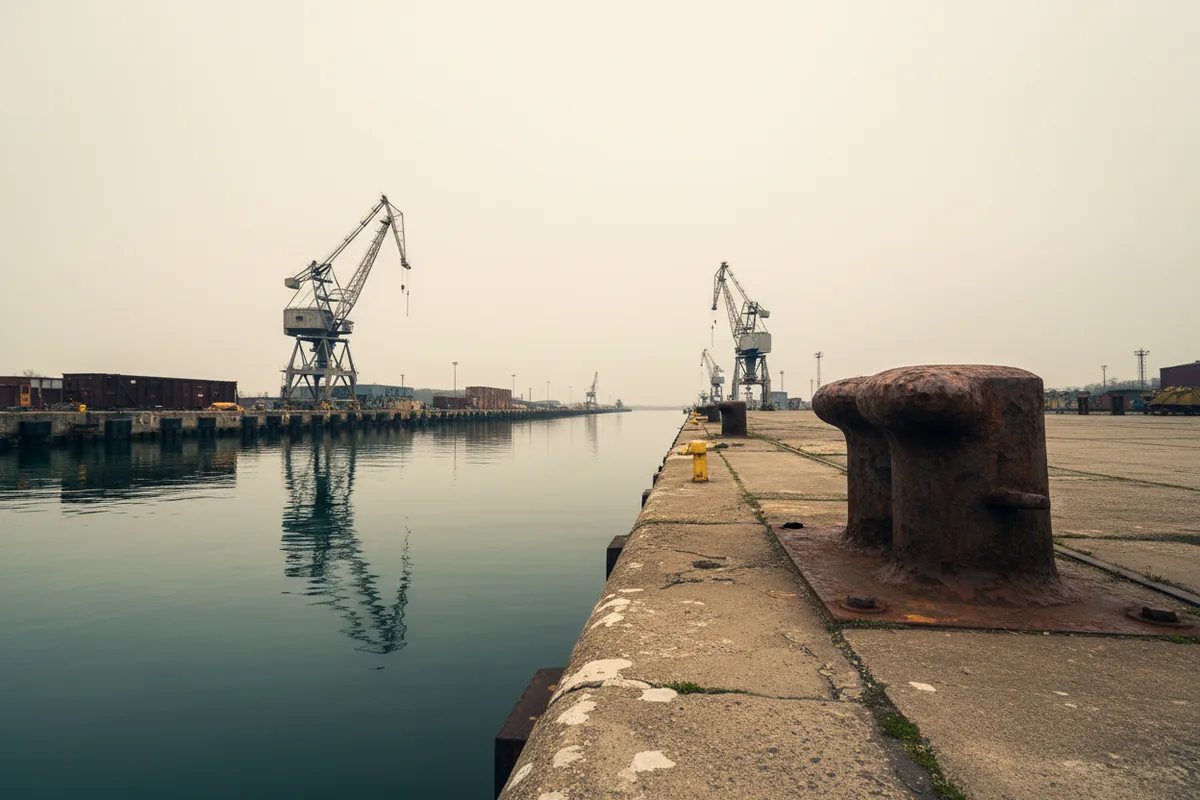
An empty naval shipyard berth where asbestos-lagged vessels were once built and repaired.
Immediate answer

Shipyards used asbestos on boilers and steam pipes. See what NCI, OSHA and the VA say, what 29 C.F.R. § 1915.1001 covers, and what a civil claim must show.

On this page
  1. If Someone You Love Worked in a Shipyard: Where the Asbestos Was
  2. What a Diagnosis Means, and What It Does Not Settle
  3. Why Yard Work, Even Nearby Work, Carried High Exposure
  4. If You Are a Veteran Who Worked in a Shipyard
  5. When a Family Connects a Diagnosis to Shipyard Work: What a Claim Would Need to Prove, and Why Causation Is the Hard Part
  6. Piecing Together a Working Life: Questions and Records That Shape a Shipyard Claim
  7. Frequently asked questions
  8. Sources

Shipyard asbestos exposure means breathing asbestos fibers released during the building, repair or breaking of ships. Shipbuilders used asbestos to insulate boilers, steam pipes and hot water pipes, and federal agencies link that work to mesothelioma, lung cancer and asbestosis. A diagnosis after shipyard work can be part of a legal claim. Whether it supports one depends on the exposure history, the medical evidence and state law.

Most people facing this question are carrying something heavy. A father or husband who spent years in a shipyard has just been diagnosed. A worker hears the word "mesothelioma" decades after leaving the trade. A family is now trying to connect a doctor's report to jobs nobody wrote down. This page explains what the federal health and safety agencies say about shipyard asbestos, how the shipyard rule is framed, and what a civil claim generally has to show. It is written for people who worked in the yards. Service aboard Navy ships is a different exposure setting, and this site covers it on its own page.

If Someone You Love Worked in a Shipyard: Where the Asbestos Was

Asbestos is a group of naturally occurring mineral fibers that resist heat and corrosion. OSHA's asbestos overview lists the forms as chrysotile, amosite, crocidolite, tremolite, anthophyllite, actinolite and any of these that have been chemically treated or altered. Its heat resistance made it useful wherever pipes and machinery ran hot.

Ships were full of those places. The National Cancer Institute's asbestos fact sheet states that "the shipbuilding industry has used asbestos to insulate boilers, steam pipes, and hot water pipes." The same fact sheet says asbestos use "increased greatly during World War II." It also says health hazards from asbestos fibers "have been recognized in workers exposed in the shipbuilding trades." NCI names the shipbuilding trades as a group rather than listing individual crafts. It lists insulation work in the construction and building trades and demolition work separately, among other jobs.

OSHA adds a point that matters for anyone who worked on older vessels. Its overview says heavy exposures "tend to occur in the construction industry and in ship repair, particularly during the removal of asbestos materials due to renovation, repairs, or demolition."

Federal regulation treats building, repairing and scrapping ships as its own category. OSHA's asbestos standard for shipyard employment, 29 C.F.R. § 1915.1001, applies to "all shipyard employment work." In practical terms, that reaches the jobs many yard workers remember, "including but not limited to" demolition or salvage of vessels where asbestos is present, removal or encapsulation of asbestos materials, and construction, alteration, repair, maintenance or renovation of vessels that contain asbestos. The full scope language appears further below.

For a family, the yard is the starting point. Exposure there is the context the rest of a claim is built around, and it is traced separately from exposure during military duty at sea. More background on the mineral itself is in the overview of asbestos exposure.

What a Diagnosis Means, and What It Does Not Settle

If a doctor has named one of these diseases, it helps to know how the agencies describe them. NCI reports that three bodies, the U.S. Department of Health and Human Services, the Environmental Protection Agency and the International Agency for Research on Cancer, classify asbestos as a known human carcinogen. According to IARC, as NCI reports it, there is sufficient evidence that asbestos causes mesothelioma and cancers of the lung, larynx and ovary.

Mesothelioma is, in NCI's words, "a relatively rare cancer of the thin membranes that line the chest and abdomen." NCI adds that "it is thought that most mesotheliomas are due to asbestos exposure." The VA's public health asbestos page describes it as a cancer of the thin lining around the lung or the abdominal cavity.

Asbestosis is scarring of lung tissue. OSHA describes it as "a buildup of scar-like tissue in the lungs" that can cause loss of lung function. The VA describes it as scarring of lung tissue "that causes breathing problems." The VA also lists pleural plaques, which is scarring on the inner surface of the ribcage and the area around the lungs.

The long gap between exposure and illness is the reason many families never linked a diagnosis to the yard. NCI states that people who develop asbestos-related diseases generally "show no signs of illness for a long time after exposure," and that "it can take from 10 to 40 years or more" for symptoms to appear. The VA puts it at "20 to 50 years after the exposure" and names shortness of breath, coughing and chest pain as examples of symptoms.

A diagnosis establishes the disease, but it does not answer the legal question of what caused it. NCI notes that even a lung biopsy, which it calls the most reliable test to confirm exposure, "cannot determine how much asbestos an individual may have been exposed to or whether disease will develop." For a family, that means the work history usually carries as much weight as the medical file. This page offers no treatment information. Questions about diagnosis and care belong with the treating physicians.

Why Yard Work, Even Nearby Work, Carried High Exposure

The process of the work is what drove exposure. OSHA ties heavy exposures in ship repair to "the removal of asbestos materials due to renovation, repairs, or demolition." The VA explains the mechanism in plain terms: exposure "can be a serious health risk if asbestos-containing material is disturbed in such a way that the particles and fibers become airborne." OSHA notes that the fibers "are too small to be seen with the naked eye."

Ship repair and breaking meant cutting into, tearing out and replacing insulation on boilers and pipes that NCI says were insulated with asbestos. OSHA states, "There is no 'safe' level of asbestos exposure for any type of asbestos fiber," and that exposures "as short in duration as a few days have caused mesothelioma in humans." NCI says risk increases "with heavier exposure and longer exposure time," yet investigators have found asbestos-related disease "in individuals with only brief exposures." A short stretch in a yard does not by itself rule the exposure out.

Many former yard workers ask what it means if they never handled insulation but worked nearby while someone else did. Whether a nearby worker breathed fibers from another trade's work is a factual question about the job, the space and the time. Coworker accounts and job records often help answer it.

Exposure could also travel home. NCI reports "some evidence that family members of workers heavily exposed to asbestos face an increased risk of developing mesothelioma." It attributes this to fibers "brought into the home on the shoes, clothing, skin, and hair of workers." The site's page on secondary asbestos exposure covers that pathway.

The federal shipyard standard reaches these kinds of work. In its own words, 29 C.F.R. § 1915.1001(a) covers, among other work:

"(1) Demolition or salvage of structures, vessels, and vessel sections where asbestos is present; (2) Removal or encapsulation of materials containing asbestos; (3) Construction, alteration, repair, maintenance, or renovation of vessels, vessel sections, structures, substrates, or portions thereof, that contain asbestos; (4) Installation of products containing asbestos; (5) Asbestos spill/emergency cleanup; and (6) Transportation, disposal, storage, containment of and housekeeping activities involving asbestos or products containing asbestos, on the site or location at which construction activities are performed."

The section adds that coverage "shall be based on the nature of the work operation involving asbestos exposure." It also says the section "does not apply to asbestos-containing asphalt roof cements, coatings and mastics." OSHA describes what its standards require of employers, including exposure monitoring, hazard awareness training, regulated areas, engineering controls, protective equipment and medical monitoring when legal limits and exposure times are exceeded. The existence of a rule does not by itself show what happened at any particular yard. That is something the records and witnesses have to show.

If You Are a Veteran Who Worked in a Shipyard

The VA names shipyard work directly. Its public health asbestos page states that veterans who served in any of the following occupations may have been exposed: "mining, milling, shipyard work, insulation work, demolition of old buildings, carpentry and construction, manufacturing and installation of products such as flooring and roofing."

For a veteran whose military duties included yard work, the VA describes its own process: "Veterans may file a claim for disability compensation for health problems they believe are related to exposure to asbestos during military service. VA decides these claims on a case-by-case basis." That last phrase matters. The VA's page does not say every veteran with asbestos exposure qualifies, and neither does this one.

A VA disability claim and a civil lawsuit are different mechanisms. One is a benefits claim decided by the VA. The other is a claim in court against a party alleged to be legally responsible. They have different rules, different decision-makers and different requirements. Both are not always open to the same person, and whether a civil claim is available at all depends on the facts and on the law that applies. The site's page on military service and asbestos covers what the VA asks for and how service records are requested. Asbestos trust claims are a third, separate route, described on the page about asbestos trust fund claims.

Families of veterans often find the overlap confusing. A veteran may have worked in a yard, served aboard ships and held civilian jobs afterward. Each setting is traced separately, and the records for each one live in different places.

When a Family Connects a Diagnosis to Shipyard Work: What a Claim Would Need to Prove, and Why Causation Is the Hard Part

For a family, a civil asbestos claim is a way of asking a court to hold someone responsible for what the yard work did to a person they love. The claim usually points in one of two directions, or both. A product liability claim points at the maker or seller of an asbestos product, alleging the product was defective or unreasonably dangerous when put into commerce and that it caused the injury. A premises liability claim points at the condition of the property where the work took place.

Under either theory, the claim generally has to show four things, and each one maps onto the family's own story. Duty asks whether the company owed the worker protection. Breach asks whether it fell short. Causation asks whether that failure caused the disease. Damages are the losses the law recognizes. Whether each element is met depends on the facts.

Causation is usually where a family's memory of a working life matters most. A claim generally has to connect a specific asbestos-containing product or worksite to the diagnosed disease, often across 30 or 40 years. Because NCI says a biopsy cannot measure how much asbestos someone was exposed to, the medical file rarely answers this alone. The yard, the years and the products used there carry the weight.

Damages are the categories of loss the applicable law may allow. These can include medical expenses, lost income, and pain and suffering. Where a person has died, wrongful-death damages may be allowed, along with claims the estate carries forward. Nothing on this page predicts an outcome.

Three sets of rules vary by state, and the state where a claim would be filed decides which ones apply. A statute of limitations is the period within which a lawsuit must be filed. States set different periods and different rules for when the clock starts, whether it runs from exposure, diagnosis or discovery of the disease. For a family, the stakes are concrete: a claim filed outside the applicable period can be barred entirely, no matter how strong the exposure history is, which is why the date of diagnosis matters. Comparative fault is a rule in some states that reduces a person's recovery if they are found to share some of the fault. Other states apply different fault rules. Damages rules also differ. No single state's rule is the national rule.

Piecing Together a Working Life: Questions and Records That Shape a Shipyard Claim

A family at this point is usually holding a diagnosis and a partial memory of a working life. The questions that tie that memory to the elements above tend to be the same few.

Which yard, which years, and was the work building, repair or breaking ships? What trades or tasks were involved? Insulating, pipe work, boiler work, demolition and working alongside those crews each leave a different trail. When was the diagnosis made? And in which state would a claim be filed?

The answers often sit in employment records, union records, any military service records for yard work during service, medical and pathology records, records identifying the products used in a yard, and the memories of coworkers who can describe the jobs and materials. Many families find that no single document tells the whole story, and when the worker has died, the history is rebuilt from what was left behind. The site's pages on mesothelioma exposure history and occupational asbestos exposure cover that process and the trades the agencies connect to asbestos.

A conversation with an attorney can help a family understand which state's rules may apply to a shipyard history, how timing relative to the diagnosis figures in, and what the exposure record would need to show for the theories described above. If that conversation would help, you can request a case evaluation.

Free case evaluation

No Fee Unless We Win Your Case

A free case evaluation is how it starts. Tell us what happened, and we’ll help you understand your options. You pay no fee unless we win your case.

Mesothelioma Legal Advocates

How it works

  1. Call us or request a free case evaluationTell us what happened, in your own words.
  2. Talk through your caseYour options, and what your case may be worth.
  3. No fee unless we winYou pay no attorney fee unless we win your case.
Free case evaluation

Tell Us What Happened

Frequently asked questions

What lung disease comes from asbestos?

NCI reports sufficient evidence that asbestos causes mesothelioma, a rare cancer of the membranes lining the chest and abdomen, as well as lung cancer. OSHA and the VA also describe asbestosis, which is scarring of lung tissue. NCI says symptoms can take 10 to 40 years or more to appear.

Will 30 minutes of asbestos exposure hurt you?

No source sets a duration that is known to be safe. NCI says risk rises with heavier and longer exposure, but disease has been found after brief exposures. OSHA states there is no "safe" level and that exposures as short as a few days have caused mesothelioma. Individual risk is a medical question.

Can you wash asbestos out of clothes?

NCI reports that family members can be exposed to fibers brought home on workers' shoes, clothing, skin and hair. It says federal law requires some employees to shower and change before leaving work, store street clothes separately, or wash work clothes separately at home. This pathway is called secondary exposure.

Which shipyard trades had the highest asbestos exposure?

NCI names "the shipbuilding trades" as a group among workers with recognized asbestos hazards, without ranking individual crafts. OSHA states that heavy exposures tend to occur in ship repair, particularly during removal of asbestos materials for renovation, repairs or demolition.

What is the OSHA standard for asbestos in shipyard work?

It is 29 C.F.R. § 1915.1001. Its scope provision covers asbestos exposure in all shipyard employment work, including demolition, salvage, repair, renovation and asbestos removal on vessels. OSHA's overview describes employer duties such as exposure monitoring, training, regulated areas and protective equipment.

How long after shipyard asbestos exposure can mesothelioma develop?

NCI states that it can take 10 to 40 years or more for symptoms of an asbestos-related condition to appear. The VA says 20 to 50 years. That gap is why many people diagnosed today trace their exposure to shipyard work done decades ago.

Does a mesothelioma diagnosis automatically mean a legal claim is valid?

No. A diagnosis establishes the disease. A civil claim generally also has to show that a specific exposure caused it and that a legally responsible party can be identified. Causation is a factual and medical question that depends on the person's exposure history and the law of the state involved.

Sources

Statutes, regulations and court sources

  1. 0129 C.F.R. § 1915.1001 — Asbestos (shipyard employment), eCFR · Electronic Code of Federal Regulations

Other sources

  1. 02Asbestos Exposure and Cancer Risk Fact Sheet — National Cancer Institute · cancer.gov
  2. 03Asbestos — Overview, Occupational Safety and Health Administration · Occupational Safety and Health Administration
  3. 04Asbestos — Public Health, U.S. Department of Veterans Affairs · publichealth.va.gov