How Federal Regulations Classify Insulation Removal Work
OSHA's asbestos standard for construction, 29 C.F.R. § 1926.1101, sorts asbestos work into four classes. Its definitions in paragraph (b) state: "Class I asbestos work means activities involving the removal of TSI and surfacing ACM and PACM."
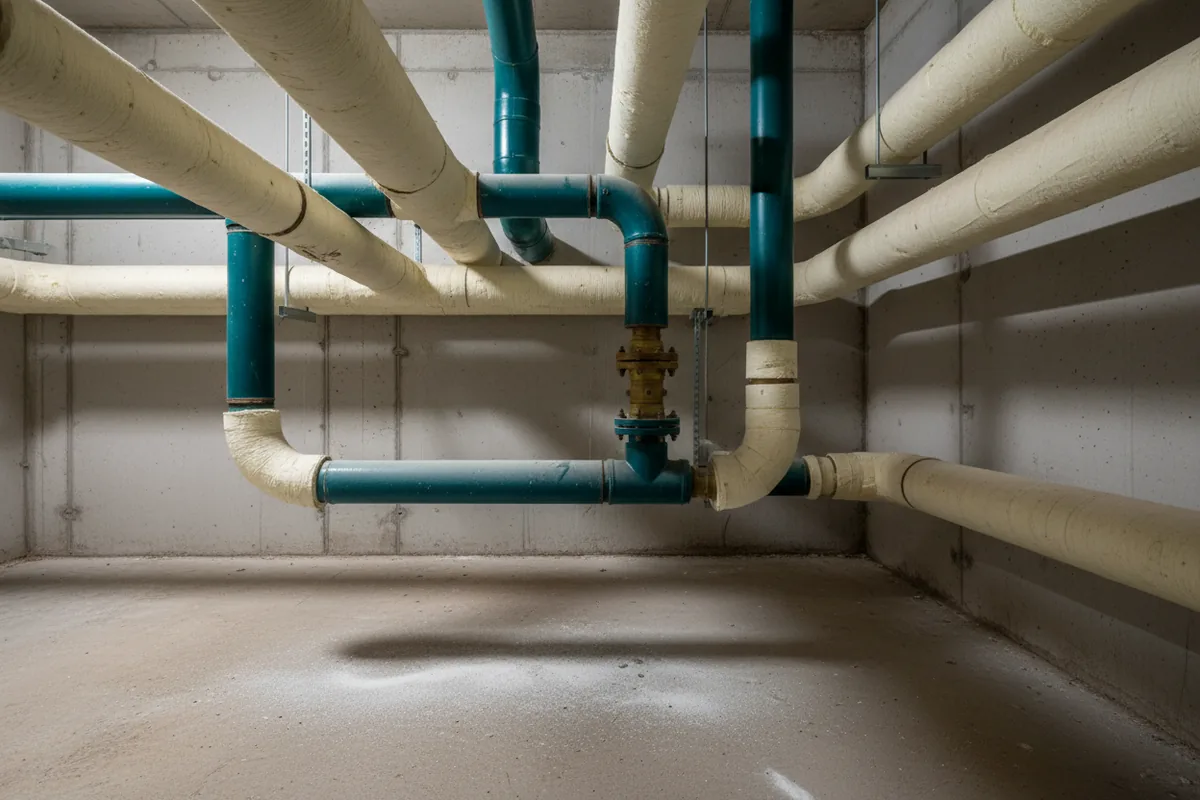
Each abbreviation has a plain meaning in the same section. Thermal system insulation (TSI) is defined as "ACM applied to pipes, fittings, boilers, breeching, tanks, ducts or other structural components to prevent heat loss or gain." Asbestos-containing material, or ACM, means "any material containing more than one percent asbestos." PACM, presumed asbestos-containing material, means "thermal system insulation and surfacing material found in buildings constructed no later than 1980," a presumption the regulation allows to be rebutted.
The other three classes show where removal of thermal system insulation sits. Class II covers removal of asbestos-containing material that is not thermal system insulation or surfacing material, such as wallboard, floor tile and sheeting, roofing and siding shingles, and construction mastics. Class III covers repair and maintenance where asbestos-containing material, including TSI, is "likely to be disturbed." Class IV covers maintenance and custodial work where employees contact but do not disturb the material, plus cleanup of dust, waste and debris from the other classes.
The standard's scope, in paragraph (a), reaches removal or encapsulation of asbestos-containing materials and "installation of products containing asbestos," along with demolition, renovation, repair and maintenance. So both sides of an insulator's work, putting it on and taking it off, fall within it.
OSHA's overview adds context: heavy exposures tend to occur in construction and ship repair, "particularly during the removal of asbestos materials due to renovation, repairs, or demolition." Where there is exposure, OSHA states, employers are required to establish regulated areas, control certain work practices, use engineering controls, and provide personal protective equipment.
Why does this matter to someone with a diagnosis? Because the kind of task, not only the presence of asbestos, can shape how a work history is described and understood. Someone who stripped pipe covering in a boiler room did work the regulation now places in Class I. Someone who wrapped new pipe did installation work the standard also covers. These rules are written for today's workplaces, and whether any particular employer or job site met them is a factual question.