
Power Plant Asbestos Exposure: What Workers and Families Should Know

Updated November 11, 2026

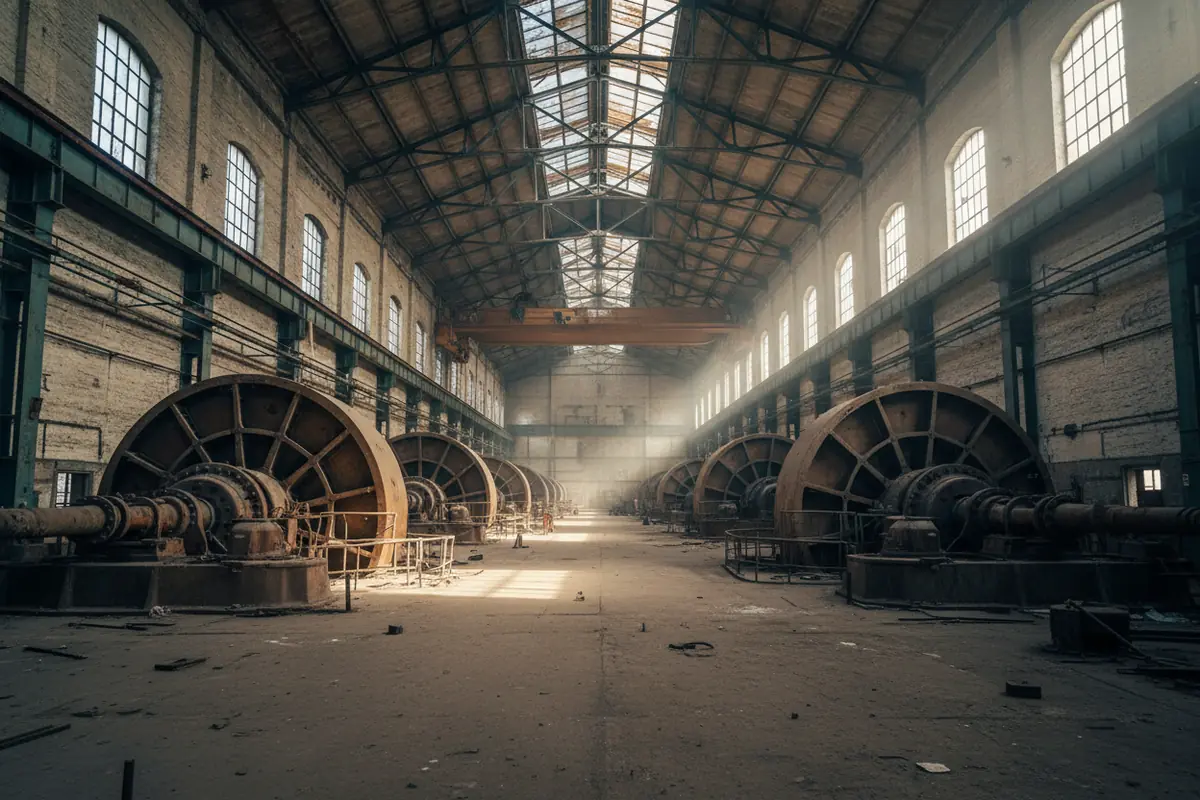
Idle turbines in a decommissioned power station hall under shafts of high window light.
Immediate answer

Power plant asbestos exposure explained: the pipe, boiler and gasket materials EPA and NCI name, what OSHA's general industry standard covers, and why state law matters.

On this page
  1. Whether Your Power Plant Work Involved Asbestos Exposure
  2. What Federal Law Expected of Employers in General Industry
  3. How Asbestos Causes Disease — What the Science Says
  4. Records That Often Matter in an Asbestos Exposure Claim
  5. What a Legal Claim Has to Show When Asbestos Exposure Is Involved
  6. Why Limitation Periods and Fault Rules Differ Across States
  7. Questions Worth Asking Before Pursuing a Claim
  8. Frequently asked questions
  9. Sources

Power plant asbestos exposure means breathing asbestos fibers released from heat-resistant materials of the kinds federal agencies name, such as insulation on steam and hot water pipes and boilers, furnace door gaskets, and heat-resistant fabrics. Exposure alone does not make a legal claim. A claim turns on a diagnosis, proof of where and how exposure happened, who was responsible, and the law of the state involved.

Most people facing this question are carrying a hard piece of news. A doctor has said "mesothelioma" or "asbestosis," and the person who heard it, or the spouse or grown child sitting beside them, is thinking back over decades of work around boilers, steam lines and turbine halls and wondering whether that is where it started. They want to know what the materials were, what the law expected of employers, and whether any of it matters now, so many years later. This page walks through those questions in order: the materials, the federal standard, what the science says about disease, the records that tend to matter, and how the law treats a claim.

Whether Your Power Plant Work Involved Asbestos Exposure

Asbestos is a natural mineral fiber found in rock and soil, as the U.S. Environmental Protection Agency explains. OSHA describes it as a group of naturally occurring minerals that resist heat and corrosion. If you worked around steam lines, boilers or furnaces, that heat resistance is why the material may have been part of the equipment you remember.

The EPA's list of places asbestos may be found includes hot water and steam pipes coated with asbestos material or covered with an asbestos blanket or tape, oil and coal furnaces and door gaskets with asbestos insulation, and heat-resistant fabrics. The EPA also lists gaskets, coatings and packaging among the manufactured goods that have contained asbestos. The National Cancer Institute's asbestos fact sheet adds that the shipbuilding industry used asbestos to insulate boilers, steam pipes and hot water pipes.

None of these sources names a particular plant or utility, and this page does not either. What the sources describe are types of material. Whether those materials were present where a particular person worked, and whether they contained asbestos, is a factual question about that workplace and that time.

The EPA also explains how fibers get into the air. In general, exposure may occur only when asbestos-containing material is disturbed or damaged, for example during product use, demolition, maintenance, repair and remodeling. For someone who spent years repairing or maintaining pipes, boilers and furnaces, the tasks performed can matter as much as the job title. Similar material types come up in industrial plant asbestos exposure and in the broader topic of asbestos exposure.

What Federal Law Expected of Employers in General Industry

The core federal rule is 29 C.F.R. § 1910.1001, OSHA's asbestos standard for general industry. Its scope paragraph reads: "This section applies to all occupational exposures to asbestos in all industries covered by the Occupational Safety and Health Act, except as provided in paragraph (a)(2) and (3) of this section."

Those exceptions matter. Under paragraph (a)(2), the section does not apply to construction work, which is covered by a separate OSHA asbestos standard for construction. Under paragraph (a)(3), it does not apply to ship repairing, shipbuilding, shipbreaking and related employments, which are covered by a separate OSHA asbestos standard for those employments. Which standard applies can depend on the kind of work a person was doing, not only where they did it. The related page on construction asbestos exposure covers that separate setting.

For a worker, the key idea is the permissible exposure limit: the legal ceiling on how much asbestos fiber may be in the air you breathe on the job. The standard measures it two ways, as a time-weighted average of fiber levels over a work shift and as a short-term "excursion limit." The standard generally requires employers to use engineering controls and work practices to keep exposure at or below those limits, except where such controls are not feasible, and to add respiratory protection where those controls fall short. Among other things, it calls for wet methods where practicable, local exhaust ventilation on tools that release fibers, and limits on using compressed air to remove asbestos.

OSHA's asbestos overview page is the official source for current requirements. It says employers must provide personal exposure monitoring and hazard awareness training where there is any potential exposure, establish regulated areas, and provide personal protective equipment, and that medical monitoring is required when legal limits and exposure times are exceeded.

Why this matters to a former worker: in a claim, the law often asks what a business was expected to do. If you recall dry sweeping, no ventilation or no respirators, those memories describe conditions a safety standard addressed. Whether any particular employer met its obligations is a separate question the facts decide, and one an attorney can help sort out against a work history.

How Asbestos Causes Disease — What the Science Says

If you have received a diagnosis, the scientific record is part of how the law views it. Three bodies, the U.S. Department of Health and Human Services, the EPA and the International Agency for Research on Cancer, classify asbestos as a known human carcinogen, a substance that causes cancer, as the National Cancer Institute reports. According to that agency, there is sufficient evidence that asbestos causes mesothelioma, which NCI describes as a relatively rare cancer of the thin membranes that line the chest and abdomen, as well as cancers of the lung, larynx and ovary. NCI adds that most mesotheliomas are thought to be due to asbestos exposure.

The EPA names three major health effects: lung cancer, mesothelioma, and asbestosis, which it describes as a serious, progressive, long-term, non-cancer disease of the lungs. OSHA describes asbestosis as a buildup of scar-like tissue in the lungs from breathing asbestos fibers.

The timing is what surprises many families. NCI explains that it can take from 10 to 40 years or more for symptoms to appear, a gap called the latency period. NCI also notes that risk rises with heavier and longer exposure, but that investigators have found asbestos-related disease in people with only brief exposures. For someone holding a diagnosis today, a job held decades ago is not too distant to matter; that gap is a recognized feature of these diseases.

NCI also reports some evidence that family members of heavily exposed workers face an increased risk of mesothelioma, thought to come from fibers carried home on shoes, clothing, skin and hair. That is the subject of secondary asbestos exposure.

This background is context for legal questions only. Whether a disease is asbestos-related is something medical review addresses, and a diagnosis does not, on its own, show where exposure happened.

Records That Often Matter in an Asbestos Exposure Claim

Because so much time usually passes, an asbestos claim often depends on paper and memory more than on anything physical. If you worked at a power plant, the records that often matter include employment and work-history records: job titles, the years worked, the units or areas assigned, and the employers and contractors involved.

Medical records are usually central. These include the diagnosis itself, pathology reports, imaging and treatment records. The EPA notes that healthcare providers usually identify possible asbestos exposure by taking a thorough history covering a person's medical, work and environmental background, so a doctor's notes on work history can matter too. NCI describes a lung biopsy as the most reliable test to confirm exposure to asbestos, and notes that it cannot show how much asbestos a person was exposed to or whether disease will develop.

Product identification records are often the hardest part. These are anything that ties a material to a maker or seller: product names, brand names on packaging or insulation, purchase or maintenance records, and the recollections of people who handled them.

Former colleagues may remember which materials were used on which equipment, and when. For a family after a death, those memories can help fill in a history the worker can no longer tell.

What records exist varies a great deal from one work history to the next. For a reader, the stake is practical: these records are often how a claim connects a diagnosis to a workplace and a product, and gaps in them are something an attorney can help assess.

The law does not treat exposure as proof of fault, and a diagnosis does not prove a claim. Claims of this kind usually ask a set of questions, and each has to be answered by evidence.

In a negligence claim, the law generally asks four things: whether someone owed a duty of care, whether that duty was breached, whether the breach caused the disease, and what harm resulted. Causation is the link between what someone did or failed to do and the illness itself. In asbestos cases it is often the most contested element, because of the long latency period and because a person may have worked at many sites.

Two kinds of claims come up often. Premises liability is the responsibility of whoever owned or controlled a property for conditions on it. Product liability is the responsibility of those who made or sold a product for harm caused by a defect in it; such a claim generally asks whether the product was defective and whether that defect caused the injury. Which theory fits depends on who controlled the site, who supplied the materials, and the law of the state involved.

A separate path exists in some situations. Some companies that made or sold asbestos-containing products set up trusts through bankruptcy. A trust fund claim is submitted to that trust rather than filed in a court, so it does not run through a lawsuit against a defendant; a civil case, by contrast, proceeds in court against defendants that have not gone through that bankruptcy process. One is not always available at the same time as the other. The page on asbestos trust fund claims explains that path.

For a person looking at a stack of old pay stubs and pathology reports, the useful question is how these elements line up with that history. A conversation with our attorney can cover that work history and those medical records, element by element.

Why Limitation Periods and Fault Rules Differ Across States

A statute of limitations is a law that sets the time window for filing a lawsuit. For asbestos and mesothelioma claims, that window is set by state law, and it differs from state to state. No single period applies everywhere.

Because of the long latency period, some states start the clock when a person learned, or reasonably should have learned, of the disease and its connection to exposure, rather than when the exposure happened. This is often called the discovery rule. When the period begins, how long it lasts and what exceptions apply all depend on the specific state's statute, and a deadline that passes can bar a claim. Wrongful-death claims, brought by family members after a death, often carry their own deadlines and rules about who may file.

Fault rules also vary. Comparative fault reduces what a person may recover by their own share of responsibility. Contributory fault is an older, stricter rule under which a person's own fault can bar recovery altogether. Which one applies depends on the state.

The damages the law may allow differ by state as well. They are usually described in categories, such as medical expenses, lost income, pain and suffering and, after a death, wrongful-death damages. What a state allows is a question of that state's law and the facts.

Someone who worked at plants in more than one state, or who later moved, may face more than one possible set of rules. If you want to talk through which state's law and deadlines may apply to a particular work history, you can request a case evaluation.

Questions Worth Asking Before Pursuing a Claim

When a person or family is still absorbing a diagnosis, the practical questions can feel tangled. Taking them one at a time often helps, and each answer shapes what options may be open.

The first is which state's law governs. That can depend on where the work happened, where the person lives now, and where the companies involved are based. It shapes the deadline, the fault rule and the damages the law allows.

The second is what kind of exposure is involved. Occupational exposure is exposure on the job. Secondary exposure, sometimes called household or take-home exposure, happens when fibers come home on a worker's clothing, which NCI describes. A spouse or child may have a different kind of claim from the worker, and whether it holds up depends on the facts and the state's law.

The third is which path fits: a trust fund claim, civil litigation, or both. They are separate mechanisms, and one may be open when the other is not.

For veterans, service-connected exposure may raise VA benefit considerations that are separate from any civil claim, and not every veteran qualifies for every benefit. The page on navy ship asbestos exposure explains that setting further.

A family may also weigh what the timeline looks like, and what records already exist versus what may have to be located. If you are working through these questions, an attorney can help sort out which ones matter most for a particular history.

Free case evaluation

No Fee Unless We Win Your Case

A free case evaluation is how it starts. Tell us what happened, and we’ll help you understand your options. You pay no fee unless we win your case.

Mesothelioma Legal Advocates

How it works

  1. Call us or request a free case evaluationTell us what happened, in your own words.
  2. Talk through your caseYour options, and what your case may be worth.
  3. No fee unless we winYou pay no attorney fee unless we win your case.
Free case evaluation

Tell Us What Happened

Frequently asked questions

What materials at power plants contained asbestos?

No federal source supplied here names a particular plant. The EPA lists material types, including hot water and steam pipes coated with asbestos material, oil and coal furnaces and door gaskets with asbestos insulation, and heat-resistant fabrics. NCI notes asbestos was used to insulate boilers, steam pipes and hot water pipes. Whether a given workplace had them is a factual question.

What diseases are linked to asbestos exposure?

NCI and the EPA link asbestos to mesothelioma, a rare cancer of the membranes lining the chest and abdomen; lung cancer; and asbestosis, a progressive non-cancer lung disease. NCI says symptoms can take 10 to 40 years or more to appear. A diagnosis does not by itself show where exposure happened.

Does OSHA have a standard for asbestos exposure at work?

Yes. 29 C.F.R. § 1910.1001 covers occupational asbestos exposure in industries under the Occupational Safety and Health Act, except construction and shipyard work, which have separate standards. OSHA's asbestos page describes current requirements, including exposure monitoring, training and protective equipment.

How long do workers have to file an asbestos claim?

That depends on state law, and limitation periods differ from state to state. Some states start the period when a person learned, or reasonably should have learned, of the disease and its link to exposure. How long it runs and what exceptions apply come from each state's statute.

Can a family member file a claim if a worker has died from mesothelioma?

Many states allow a wrongful-death claim, a lawsuit brought by certain family members or an estate after a death caused by another's conduct. Who may file, what damages the law allows and the deadline differ by state, and which state's law applies depends on the facts.

What is the difference between a trust fund claim and a lawsuit for asbestos exposure?

A trust fund claim goes to a trust that some asbestos product companies set up through bankruptcy. A lawsuit goes through the courts against defendants that have not gone through that process. They are distinct mechanisms, and depending on the facts, one, both or neither may be available.

What records are typically relevant in a power plant asbestos claim?

The records that often matter include employment and work-history records, medical records and pathology reports, product identification records such as product or maker names, and the names of co-workers or other witnesses who remember the materials and equipment.

Can secondary or household asbestos exposure support a claim?

Secondary exposure happens when fibers come home on a worker's clothing, shoes, skin or hair, and NCI reports some evidence of increased mesothelioma risk among family members of heavily exposed workers. Whether a household-exposure claim can proceed depends on the facts and the applicable state's law.

Sources

Statutes, regulations and court sources

  1. 0129 C.F.R. § 1910.1001, Asbestos (eCFR) · Electronic Code of Federal Regulations

Other sources

  1. 02Asbestos - Overview (Occupational Safety and Health Administration) · Occupational Safety and Health Administration
  2. 03Learn About Asbestos (U.S. Environmental Protection Agency) · U.S. Environmental Protection Agency
  3. 04Asbestos Exposure and Cancer Risk Fact Sheet (National Cancer Institute) · cancer.gov