How Lawyers Identify Asbestos Defendants in a Mesothelioma Case

Updated November 11, 2026

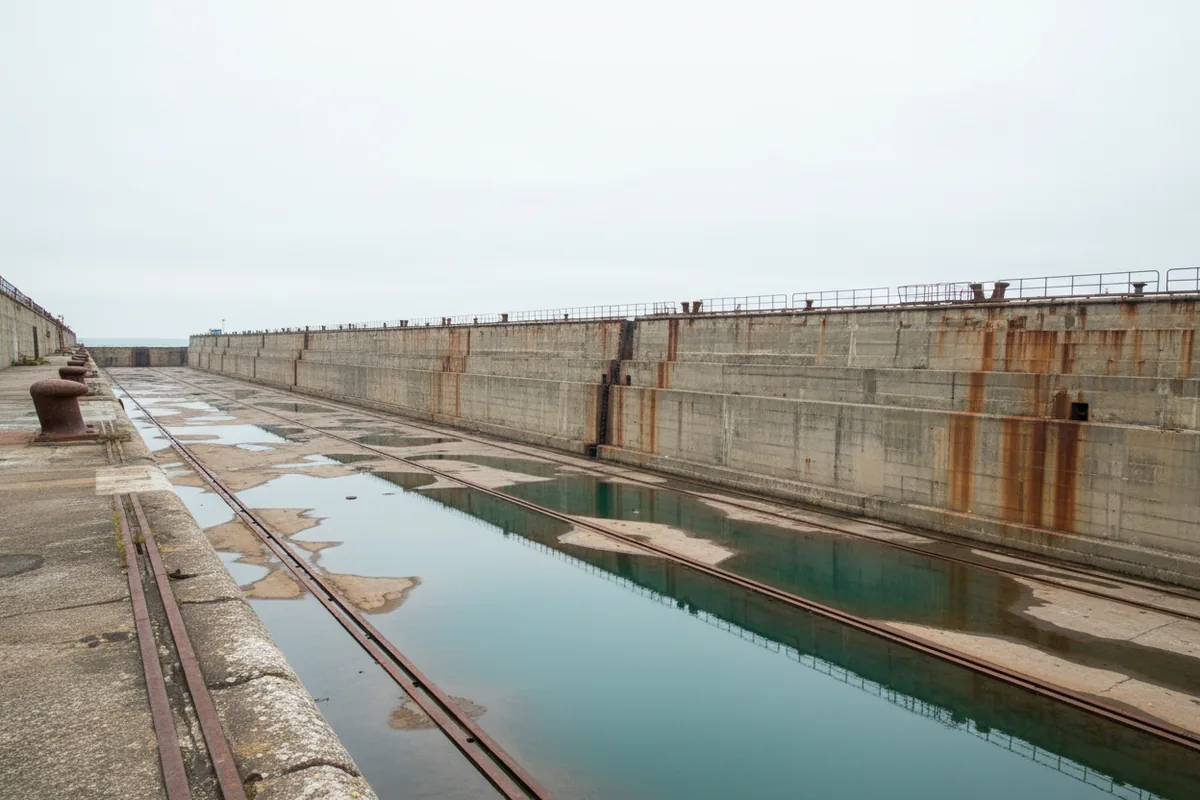
An empty shipyard dry dock where asbestos defendants are traced through occupational work history.
Immediate answer

How asbestos defendants are identified: rebuilding work and service history, matching products to worksites, and checking 11 U.S.C. § 524(g) asbestos trusts.

On this page
  1. Why Your Case May Name More Than One Asbestos Defendant
  2. Rebuilding the Work and Service History When Memories and Records Are Incomplete
  3. Matching Products to Worksites: What the Exposure Record Shows
  4. If a Company No Longer Exists: How Asbestos Bankruptcy Trusts Affect Your Options
  5. Why the Legal Standard Differs by State — and What That Means for Defendant Identification
  6. What Strengthens the Link Between Your Exposure and a Defendant
  7. Frequently asked questions
  8. Sources

If you or someone in your family has mesothelioma, the companies that may be responsible are found by working backward from the past. Lawyers rebuild where the person worked or served, identify the asbestos-containing products used at each place, trace who made or sold them, and check whether a company's asbestos liabilities passed to a bankruptcy trust.

Most people facing a mesothelioma diagnosis, or the loss of someone to it, are trying to make sense of exposure that may have happened decades ago, at jobs that ended long ago, with materials nobody named at the time. You may remember a shipyard, a boiler room or a job site, but not a single brand. Families after a death often carry even less: a few stories, an old pay stub, a discharge paper in a drawer. This page explains how that thin trail is turned into a list of companies a case may name, and why the answer often involves more than one company and more than one legal path.

Why Your Case May Name More Than One Asbestos Defendant

A defendant is a company or other entity that a lawsuit names as potentially responsible for an injury. In a mesothelioma case, identifying defendants means working out which companies made, sold or distributed the asbestos-containing products a person encountered, and whether those companies still exist in a form that can be sued.

Asbestos exposure rarely happened in one place. A person may have worked at several sites over many years, handled different materials at each, or served in the military before starting a civilian career. Each place and period can point to different products, and different products can point to different companies. That is why a single case naming more than one defendant is common rather than unusual.

Some companies that made or sold asbestos products no longer operate as they once did. Federal bankruptcy law allows a court that confirms a reorganization plan to issue an order tied to a trust that takes on the company's asbestos liabilities. That law is 11 U.S.C. § 524(g), discussed in its own section below.

For a person who is ill, or a family who is grieving, this step matters because the companies identified shape which legal routes may exist at all. It is research work, built from records, testimony and product history. If you are early in this process, a useful starting point is simply listing every job, site and period of service anyone remembers, even roughly; a conversation with an attorney can help sort which of those places may lead somewhere. A broader overview appears on the page about an asbestos lawyer's role.

Rebuilding the Work and Service History When Memories and Records Are Incomplete

Every defendant search starts with a timeline: each employer, each job title, each site, and roughly when the person was there. Exposure sites decide which products were present, so a fuller history usually means more places to examine.

Memory alone often leaves gaps, especially when the person who did the work has died. The records that tend to fill those gaps include employment records, union membership records showing which trade a person worked in, and Social Security earnings records, which list employers by year. Former co-workers can add what paperwork cannot: what the work looked like, what materials were handled, and who else was there. If you were the one who did the work, your own recollection of tasks and materials is part of that record too.

For veterans, military service adds another layer. The VA's asbestos exposure page says a veteran may be eligible for disability compensation when both of these are true: the veteran has a health condition caused by exposure to asbestos, and had contact with asbestos while serving. The VA lists three documents for the claim: medical records that state the health condition, service records that list the job or specialty, and a doctor's statement connecting the in-service contact with asbestos to the condition. Not every veteran meets those requirements; the VA decides eligibility on the evidence.

Service records come from the National Archives, whose military service records page explains that records become open to the public 62 years after a service member leaves the military; records of people who left less recently are subject to access restrictions, and requests must be signed and dated by the veteran or next of kin. Shipboard exposure is covered in more depth on the page about Navy ship asbestos exposure.

A VA benefit claim and a civil lawsuit against companies are distinct mechanisms. A VA claim concerns benefits for a service-connected condition; a civil suit names companies whose products were involved. Whether one, the other or both are open in a given situation depends on the facts, and neither is automatically available alongside the other.

Matching Products to Worksites: What the Exposure Record Shows

Once the places are known, the next question is what was in them. The EPA's asbestos basics page explains that asbestos was used in building materials for insulation and as a fire retardant, and in manufactured goods, mostly building materials (roofing shingles, ceiling and floor tiles, paper products and asbestos cement products), friction products (clutch, brake and transmission parts), heat-resistant fabrics, packaging, gaskets and coatings. Its list of places asbestos may be found includes hot water and steam pipes coated with asbestos material and oil and coal furnaces with asbestos insulation.

OSHA's asbestos overview describes where exposure tends to be heaviest: in construction and ship repair, particularly during removal of asbestos materials in renovation, repair or demolition. It also names the manufacture of asbestos products and automotive brake and clutch repair work. Those settings help narrow which product types to look for at a given site, and pages on construction asbestos exposure and insulation worker exposure cover two of them.

Linking a product type to a specific maker usually draws on historical purchasing records, product documentation such as safety data sheets, and testimony from former co-workers or supervisors who remember what was used and whose name was on it. This link is what makes a company legally relevant: not that asbestos existed somewhere, but that a particular company's product was where the person worked.

Employer records can help show what a worker was exposed to and when. Under 29 C.F.R. § 1926.1101(n), OSHA's asbestos standard for construction, an employer must keep an accurate record of all measurements taken to monitor employee exposure. That record includes at least the date of measurement; the operation being monitored; the sampling and analytical methods used and evidence of their accuracy; the number, duration and results of samples; the type of protective devices worn, if any; and the name and exposure of the employees represented. It must be kept for at least thirty years. The same paragraph requires a medical surveillance record for each covered employee, including the medical examination results, physician's written opinions, any asbestos-related medical complaints and the information given to the physician, kept for the duration of employment plus thirty years. In litigation, records like these may be sought through discovery, the formal process of exchanging evidence.

For a family, this means a forgotten brand name is not necessarily the end of the trail. Names of co-workers or supervisors, the trade the person worked in, and the type of equipment handled can all point toward products. Those details are worth writing down before a conversation with an attorney, who can help assess which records may still exist.

If a Company No Longer Exists: How Asbestos Bankruptcy Trusts Affect Your Options

An asbestos bankruptcy trust is a fund created under a confirmed chapter 11 reorganization plan to assume a company's asbestos liabilities and pay claims. For a trust to qualify under 11 U.S.C. § 524(g), four conditions apply, and each has a plain meaning for someone with a claim:

  • It must assume the liabilities of a debtor that had been named as a defendant in personal injury, wrongful death or property-damage actions over asbestos. In practice, the trust stands in for the company on those claims.
  • It must be funded in whole or in part by the debtor's securities and its obligation to make future payments. The money behind the trust comes from the company itself.
  • It must own, or be able to own, a majority of the voting shares of the debtor, its parent or a subsidiary that is also a debtor. This ties the trust's resources to the company's ongoing value.
  • It must use its assets or income to pay claims and demands. The trust exists to pay people with asbestos claims.

Alongside the trust, the court may issue an injunction, a court order that bars entities from taking legal action to collect on claims that the plan says the trust will pay, except actions the injunction, the confirmation order or the plan expressly allows. That means claims covered by the plan go to the trust instead of to the reorganized company. The statute also lets such an injunction bar some actions against certain identifiable third parties, such as insurers or owners, where their alleged liability arises from their relationship with the debtor.

The statute expects future claimants, which matters to someone diagnosed long after a company's bankruptcy. Before confirming the plan, the court must determine, among other things, that the trust will operate through mechanisms such as structured or periodic payments, pro rata distributions or matrices that give reasonable assurance it will value and pay present claims and future demands involving similar claims in substantially the same manner. A court must also appoint a legal representative to protect people who might bring such demands later.

A trust claim is not a lawsuit. Each trust operates under its own plan and procedures, and a claim follows that trust's process, not a courtroom's. A person's history may point to a trust, to a company that still operates, to both, or to neither, depending on the products and companies the evidence connects to the exposure. If a company you remember is said to be bankrupt, one question a conversation with an attorney can help answer is whether a trust took on its liabilities and how that fits alongside any lawsuit.

A statute of limitations is the law that sets a deadline for filing a claim, and for asbestos and mesothelioma claims it is set by state law, so no single period applies everywhere. Because mesothelioma can appear many years after exposure (the EPA notes that disease symptoms may take many years to develop), state rules often tie the start of the period to when the disease was diagnosed or discovered rather than to when the exposure happened. The exact starting point, length and exceptions come from each state's own statute.

Wrongful death claims, brought by family members after a death, usually have their own limitation periods, which also vary by state and may not match the period for a living person's injury claim. For a family, that can mean different rules depending on whether a case began before or after the person died.

When several companies are involved, the state's rules on comparative fault, meaning how responsibility is divided, can shape how a recovery works. Some states reduce what a person may recover based on shares of fault, and states also differ on how responsibility is split among several defendants. For someone whose history points to many companies, those rules affect how the defendants relate to one another in the case, and the state whose law applies can depend on where the exposure happened and where a case is filed.

This is often where a diagnosis turns into practical questions: which state's deadline governs, when it may have started, and how the companies on the list fit under that state's fault rules. If those questions are on your mind, you may want to consider a conversation about your case with our attorney, which can cover the dates, places and diagnosis involved.

A product being present at a worksite is only the start. A claim against a company typically rests on four legal elements, and whether each is met depends on the facts. A duty is a legal obligation the company owed, such as care in making or selling its product. A breach is a failure to meet that obligation. Causation is the link between the company's product or conduct, the person's exposure and the disease. Damages are the harms the law recognizes, such as medical expenses, lost earnings and pain and suffering, as the applicable state's law defines them.

The medical record is the foundation. A mesothelioma diagnosis confirmed by pathology, the examination of tissue, is what a claim usually rests on; without a confirmed diagnosis, the legal questions about exposure have nothing to attach to. The EPA notes that healthcare providers identify possible asbestos-related conditions by taking a thorough history, including medical, work, cultural and environmental history, and may use tools such as physical examination, chest x-rays and pulmonary function tests. Those medical records also help tie the disease to the exposure history.

To show that a particular product caused the disease, cases often rely on experts who explain the fiber type involved, how much exposure occurred and how the disease develops. OSHA's overview states that there is no "safe" level of asbestos exposure for any fiber type and that exposures as short as a few days have caused mesothelioma. That background matters, but a specific link between a specific product and a specific person's disease still has to be shown with evidence.

The records that usually strengthen the connection include pathology and imaging records confirming the diagnosis, employment and union records placing the person at a site, and product records or testimony tying a particular product to that site. Gaps in any of these can narrow which companies a case can reach. If you are gathering papers, those three categories are a practical way to organize them, and an attorney can help identify which gaps may be filled. More background appears on the page about asbestos exposure.

Free case evaluation

No Fee Unless We Win Your Case

A free case evaluation is how it starts. Tell us what happened, and we’ll help you understand your options. You pay no fee unless we win your case.

Mesothelioma Legal Advocates

How it works

  1. Call us or request a free case evaluationTell us what happened, in your own words.
  2. Talk through your caseYour options, and what your case may be worth.
  3. No fee unless we winYou pay no attorney fee unless we win your case.
Free case evaluation

Tell Us What Happened

Frequently asked questions

How do lawyers figure out which companies are responsible for asbestos exposure?

They rebuild the person's work and service history, identify the asbestos-containing products used at each site, and trace which companies made or distributed them. They also check whether a company's asbestos liabilities passed to a trust under 11 U.S.C. § 524(g). Employment, union and service records, employer exposure records and co-worker testimony all feed that work.

What is an asbestos bankruptcy trust and how does it relate to a lawsuit?

It is a fund created under a confirmed chapter 11 plan to assume a company's asbestos liabilities and pay claims, as 11 U.S.C. § 524(g) describes. A court order can bar suits on claims the trust is to pay. A trust claim and a lawsuit against an operating company are separate processes; which applies depends on the exposure history.

Can a veteran file both a VA claim and a civil lawsuit for asbestos exposure?

They are distinct mechanisms. The VA looks for a condition caused by asbestos and contact with asbestos during service, supported by medical records, service records listing the job or specialty, and a doctor's statement. A civil suit names companies whose products were involved. Whether either or both are available depends on the facts.

What records help identify asbestos defendants?

Records that often matter include employment and union records, Social Security earnings records, military service records from the National Archives, employer exposure and medical surveillance records kept under 29 C.F.R. § 1926.1101(n), pathology and medical records confirming the diagnosis, and testimony from co-workers or supervisors who remember the products used.

Does the statute of limitations affect which defendants can be named?

Limitation periods are set by state law and vary from state to state, and wrongful death periods may differ from injury periods. Many state rules tie the start to diagnosis or discovery rather than exposure, given the long gap before disease appears. The deadline that applies depends on the state and the facts.

What does it mean when an asbestos company no longer exists?

It may mean the company reorganized in bankruptcy and its asbestos liabilities were assumed by a trust under 11 U.S.C. § 524(g), with claims covered by the plan directed to the trust. Each trust follows its own plan and procedures, and payment from a trust is not assured; it depends on its criteria and the exposure history.

What industries and products are most often involved in asbestos defendant identification?

OSHA points to construction, ship repair, manufacture of asbestos products, and brake and clutch repair. The EPA lists products including insulation, pipe coverings, floor and ceiling tiles, roofing, cement products, gaskets, heat-resistant fabrics and friction parts. Identification focuses on the specific products at the specific places a person worked.

Sources

Statutes, regulations and court sources

  1. 0111 U.S.C. § 524 — Effect of discharge (govinfo.gov) · GovInfo (U.S. Government Publishing Office)
  2. 0229 C.F.R. § 1926.1101 — Asbestos (eCFR) · Electronic Code of Federal Regulations

Other sources

  1. 03Learn About Asbestos — U.S. Environmental Protection Agency · U.S. Environmental Protection Agency
  2. 04Asbestos - Overview — Occupational Safety and Health Administration · Occupational Safety and Health Administration
  3. 05Veterans Asbestos Exposure — U.S. Department of Veterans Affairs · va.gov
  4. 06Request Military Service Records — National Archives and Records Administration · archives.gov