Asbestos Product Liability: What the Law Looks At and Why It Matters

Updated November 11, 2026

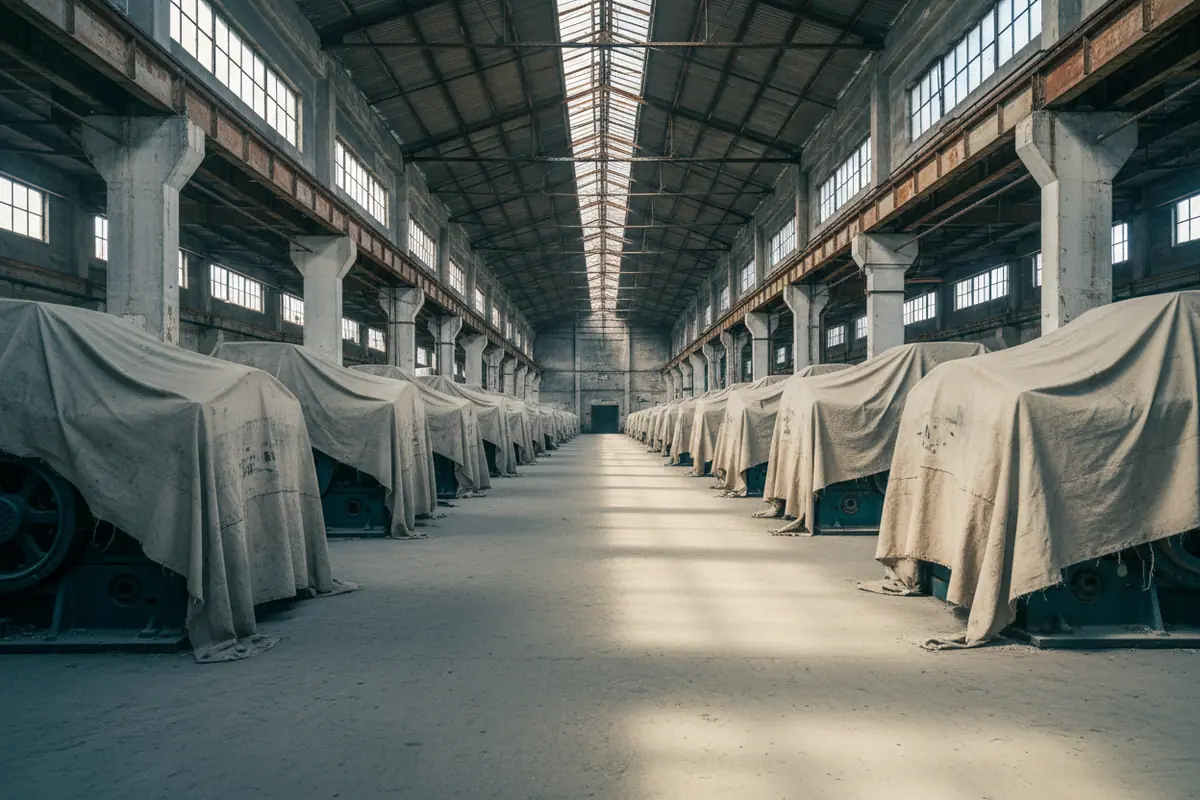
A silent decommissioned factory floor where asbestos-containing industrial products were once manufactured.
Immediate answer

How asbestos product liability works: the three defect theories, five things a claim must show, how 524(g) trusts differ from lawsuits, and why state law varies.

On this page
  1. How the Law Connects Your Illness to a Company's Product
  2. If You Remember the Job but Not the Brand
  3. Why the Diagnosis Is the Starting Point for a Claim
  4. What a Product Liability Claim Has to Show
  5. Evidence That Shapes an Asbestos Product Liability Case
  6. When the Company Behind a Product Went Through Bankruptcy
  7. How State Rules Differ — and Why That Affects Your Situation
  8. Frequently asked questions
  9. Sources

Yes. Companies that made, distributed or sold asbestos-containing products can be held legally responsible for illness those products caused, under a body of law called product liability. A claim generally looks at four things: the product, who made or sold it, whether its warnings were adequate, and whether exposure to it caused the disease.

Most people facing a mesothelioma diagnosis, or grieving someone who died of it, arrive at this question with a long work history behind them and very little sense of how it connects to a courtroom. You may remember pipe covering, brake jobs or ship boilers from forty years ago, but not who made any of it. You may also be wondering how a company could answer for something that happened so long ago. This page explains how the law connects an asbestos-related disease to the products behind it, what a claim has to show, how bankruptcy trusts fit in, and why the state whose law applies matters.

How the Law Connects Your Illness to a Company's Product

Product liability is a legal claim that a manufacturer or seller is responsible for harm caused by a defective or unreasonably dangerous product. The law usually describes three ways a product can be defective.

A manufacturing defect means one item came out differently from how it was meant to be made. A design defect means the product, built exactly as intended, was unreasonably dangerous because of its design. A failure to warn means the company did not give adequate warning about a hazard it knew of, or should have known of. In asbestos claims, the warning question often draws the most attention, because the asbestos was usually an intended ingredient rather than a mistake on the line. The question becomes what the company knew about the hazard and what it told the people who used the product, which may include you or the person you lost.

States write these rules in their own words. Texas offers one example. Chapter 82 of the Texas Civil Practice and Remedies Code defines a "products liability action" as "any action against a manufacturer or seller for recovery of damages arising out of personal injury, death, or property damage allegedly caused by a defective product whether the action is based in strict tort liability, strict products liability, negligence, misrepresentation, breach of express or implied warranty, or any other theory or combination of theories." That is Texas's definition only. Other states define these claims differently, and no single state's rule governs everywhere.

For a family, the stakes are practical: the theory that fits shapes which companies a claim can name and what it has to prove about each one. That depends on the product, the warnings that came with it, and how the person encountered it.

If You Remember the Job but Not the Brand

Asbestos turns up in a long list of products because it resists heat and corrosion. OSHA's asbestos overview names insulation for pipes, including steam lines, floor tiles, building materials, and vehicle brakes and clutches, and adds that workers were likely exposed during the manufacture of asbestos products such as textiles, friction products, insulation and other building materials.

The EPA's asbestos basics page lists building materials, including roofing shingles, ceiling and floor tiles, paper products and asbestos cement products, along with friction products such as automobile clutch, brake and transmission parts, heat-resistant fabrics, packaging, gaskets and coatings. It also names hot water and steam pipes covered with asbestos material, blanket or tape, and furnace door gaskets with asbestos insulation. The NCI asbestos fact sheet adds that the shipbuilding industry used asbestos to insulate boilers, steam pipes and hot water pipes, and that it appeared in paints, adhesives and plastics. The trades behind these products have their own pages here, including insulation worker asbestos exposure, brake and clutch asbestos exposure and shipyard asbestos exposure.

Responsibility is not limited to whoever made the raw product. Product liability can reach manufacturers, distributors and sellers along the supply chain. Texas, again as one example, defines a "seller" as a person "engaged in the business of distributing or otherwise placing, for any commercial purpose, in the stream of commerce for use or consumption a product or any component part thereof," and its section 82.003 provides that a seller that did not manufacture the product is not liable unless the claimant proves one of the conditions that section lists.

A person who worked around insulation, gaskets and brakes over a career may have been exposed to many products from many companies. A company no one thinks to identify is a company a claim does not reach, which is why identifying the products actually present at a particular worksite is often the central task in building a claim.

Why the Diagnosis Is the Starting Point for a Claim

The NCI fact sheet states that asbestos is classified as a known human carcinogen and that, according to the International Agency for Research on Cancer, there is sufficient evidence that asbestos causes mesothelioma and cancers of the lung, larynx and ovary. NCI describes mesothelioma as "a relatively rare cancer of the thin membranes that line the chest and abdomen," and states that most mesotheliomas are thought to be due to asbestos exposure. EPA and OSHA both describe asbestosis, a scarring of lung tissue that EPA calls "a serious progressive, long-term, non-cancer disease of the lungs."

Timing is part of what makes these cases unusual. NCI states that "it can take from 10 to 40 years or more for symptoms of an asbestos-related condition to appear," and that asbestos-related disease has been found in people with only brief exposures. OSHA states that exposures as short as a few days have caused mesothelioma. NCI also notes some evidence that family members of heavily exposed workers face increased risk from fibers carried home on clothing, skin and hair, which is the basis of many secondary-exposure claims.

For a legal claim, the diagnosis names the disease, and the disease's documented link to asbestos is what lets a claim connect the illness back to an exposure. The long gap between exposure and diagnosis also affects when a statute of limitations, the deadline for filing a lawsuit, begins to run. Those deadlines differ from state to state, as a later section explains.

The records that usually matter include the pathology report, imaging, and the treating physician's notes describing the diagnosis. This page describes these diseases only as federal health sources do, as background for the legal questions, and not as medical guidance.

What a Product Liability Claim Has to Show

An asbestos product claim generally rests on five things:

  1. The product contained asbestos.
  2. The person was exposed to that product.
  3. The company being sued made, distributed or sold that product.
  4. The product was defective or unreasonably dangerous, most often because its warnings were inadequate.
  5. The exposure caused the person's disease.

The fifth point, causation, is where many cases turn. Causation is the link that runs from a specific product, through a specific exposure, to a specific illness. It is not enough to show that asbestos causes mesothelioma in general. A claim usually has to tie this company's product to this person's work or home life, and that exposure to this diagnosis.

Each of these points is a question of fact, and a claim that cannot support one of them may not go forward against that company. A family may have strong medical records but little proof of which brand of pipe covering was used decades ago, or the reverse. A conversation with an attorney can cover how far the available facts reach on each point.

Evidence That Shapes an Asbestos Product Liability Case

Because the exposure often happened decades before the diagnosis, evidence tends to be pieced together from many places. The categories that usually matter include:

  • Work history and employment records, including union records, job titles and the worksites where someone worked.
  • Military service records, for people whose exposure may have occurred in service. Service alone does not mean any particular claim or benefit is available.
  • Product identification documents, such as invoices, purchase orders, labels, packaging and safety data sheets.
  • Medical records and pathology reports documenting the diagnosis.
  • Accounts from co-workers who remember the products used, and from family members who remember the work clothes that came home.
  • Company documents bearing on what a manufacturer or seller knew about the hazard and when.

Injured people and families often start with what they already have: pay stubs, discharge papers, old photographs from a job site, or the names of people who worked alongside them. Records forty or fifty years old can take real effort to locate, and some no longer exist; co-worker memories sometimes fill gaps that paper cannot. More on where exposure happened appears on the asbestos exposure page.

When the Company Behind a Product Went Through Bankruptcy

Some companies that faced asbestos lawsuits reorganized in bankruptcy under chapter 11, and federal law provides a specific mechanism for them. Under 11 U.S.C. § 524(g), a court confirming a chapter 11 plan may issue an injunction connected to a bankruptcy trust: a trust that, under the plan, "is to assume the liabilities of a debtor which at the time of entry of the order for relief has been named as a defendant in personal injury, wrongful death, or property-damage actions seeking recovery for damages allegedly caused by the presence of, or exposure to, asbestos or asbestos-containing products."

The statute sets conditions, including that the trust be funded at least in part by the debtor's securities and future payments, that it use its assets or income to pay claims and demands, and that a separate class of affected claimants vote at least 75 percent in favor of the plan. The injunction can then bar legal action to collect on claims the plan says the trust is to pay, except actions the injunction, confirmation order or plan expressly allow. The statute also calls for trust mechanisms that provide reasonable assurance that present and future claims involving similar facts will be valued and paid in substantially the same manner. A summary of how these claims work appears on the asbestos trust fund claims page.

In plain terms, a company that can no longer be sued in the ordinary way may still have a trust that pays claims under its own procedures. Trust claims and civil lawsuits are distinct mechanisms: a trust follows its own rules, while a lawsuit proceeds in court against companies that remain open to suit. Whether a trust claim, a lawsuit or both are available depends on the facts of the exposure and on which companies' products were involved, and not every route is necessarily open at once.

How State Rules Differ — and Why That Affects Your Situation

State law governs most asbestos product liability cases, and the rules that matter most to families differ from state to state: how long a person has to file, how fault is divided, and what damages the law allows.

Limitation periods are a clear example. Because these diseases surface decades after exposure, when the clock starts is often as important as how long it runs. Texas offers one example: section 16.003 of the Texas Civil Practice and Remedies Code provides that, except as provided by sections 16.010, 16.0031 and 16.0045, a personal injury suit must be brought "not later than two years after the day the cause of action accrues," and that for an injury resulting in death, suit must be brought within two years, with the cause of action accruing on the death of the injured person. That same chapter excludes time during which a person is under a legal disability, such as being younger than 18. Other states use different periods, different starting points and different exceptions.

Fault rules differ too. Comparative fault is a rule that divides responsibility among the parties based on each one's share of fault. As one example, section 33.001 of the Texas Civil Practice and Remedies Code provides that a claimant may not recover damages if the claimant's percentage of responsibility is greater than 50 percent, and section 33.012 reduces damages by the claimant's own percentage when the claimant is not barred. Other states divide fault in other ways, and some use stricter rules.

Which state's law applies, and what it says about timing, fault and damages, can shape whether a claim can be brought at all. For families with that question in mind, requesting a case evaluation is one way to talk through where the exposure happened and which state's rules may be involved, a question this page cannot sort out for any one family.

Free case evaluation

No Fee Unless We Win Your Case

A free case evaluation is how it starts. Tell us what happened, and we’ll help you understand your options. You pay no fee unless we win your case.

Mesothelioma Legal Advocates

How it works

  1. Call us or request a free case evaluationTell us what happened, in your own words.
  2. Talk through your caseYour options, and what your case may be worth.
  3. No fee unless we winYou pay no attorney fee unless we win your case.
Free case evaluation

Tell Us What Happened

Frequently asked questions

What is asbestos product liability?

Asbestos product liability is a legal claim that a manufacturer, distributor or seller of an asbestos-containing product is responsible for harm the product caused. It asks whether the product was defective or unreasonably dangerous, often because of inadequate warnings, and whether that defect caused the person's disease.

Who can be held responsible in an asbestos product liability case?

Responsibility can reach companies across the supply chain, including manufacturers, distributors and sellers, not only the original manufacturer. Because so many products contained asbestos, one person's exposure history may involve more than one company. Some states, Texas among them, set specific conditions before a seller that did not make the product can be held liable.

What does a plaintiff have to prove in an asbestos product liability lawsuit?

A plaintiff generally must show that the product contained asbestos, that they were exposed to it, that the defendant made or sold it, that it was defective or unreasonably dangerous, and that the exposure caused their disease. Whether each point is met depends on the evidence in that case.

What diseases are at issue in an asbestos product liability claim?

The National Cancer Institute states there is sufficient evidence that asbestos causes mesothelioma and cancers of the lung, larynx and ovary. EPA and OSHA also describe asbestosis, a progressive scarring of the lungs. The specific diagnosis and its documented link to asbestos are central to causation.

What is an asbestos bankruptcy trust, and how is it different from a lawsuit?

Under 11 U.S.C. § 524(g), a chapter 11 plan can set up a trust to assume a debtor's asbestos liabilities and pay claims. A trust pays under its own procedures; a lawsuit proceeds in court. They are distinct mechanisms, and which are available depends on the exposure facts and companies involved.

How long does someone have to file an asbestos product liability claim?

Limitation periods differ by state, including when the period starts and what exceptions apply. As one example, Texas's section 16.003 generally sets two years from when the cause of action accrues for personal injury, and two years from death for a death claim, subject to listed exceptions. No single deadline applies everywhere.

Does it matter which state's law applies to an asbestos product liability case?

Yes. State law governs most of these cases, and limitation periods, fault rules and damages rules differ from state to state. Which state's rules apply can affect whether a claim can be brought and how responsibility is divided among the parties.

What kinds of evidence matter in an asbestos product liability case?

Evidence that usually matters includes work and employment records, military service records, product identification documents, medical records and pathology reports, and accounts from co-workers or family members. Because these diseases appear decades after exposure, some records take effort to locate.